
Several more months passed in the blink of an eye.
The sales of gaming helmets had increased, and the probability of winning in-game rewards had also grown. Naturally, the scalpers' prices plummeted as a result—quite significantly, in fact. But there was still profit to be made. From the peak price of 580,000 a few months ago, it had now dropped to around 170,000.
Cao Cheng arrived in the capital.
He met up with his father-in-law, and of course, the topic of the game came up.
Some negative side effects had begun to surface.
Many young people were quitting their jobs, unable to endure their bosses' scolding or the "blessing" of the 996 work schedule. At the slightest provocation, they’d curse their boss’s mother and resign on the spot.
They went home to earn money by playing games—specifically, by farming in-game currency.
Though it was still hard work,
at least in the game, they had freedom. Even at their worst, they could make two or three thousand a month, enough to get by.
As long as they weren’t lazy and put in a little effort, they could earn something.
And if luck was on their side, they could make quite a bit.
Even though more people were farming in-game currency, the exchange rate between copper coins and real-world money hadn’t dropped—in fact, it had risen slightly.
Because more players were joining.
Previously, there were only a little over two million registered players.
Now, that number had soared past ten million.
Demand was greater than ever.
And…
as players explored more of the game’s world, all sorts of hidden encounters, martial arts rumors, and factions began to emerge.
There were just too many places to spend money.
To put it bluntly, traveling from the south to the north of a major city like Chang’an required taking a carriage—and that cost money.
This wasn’t like those old games where you could just sprint across the map in seconds.
There were no teleportation arrays either.
This wasn’t some xianxia cultivation world.
So now,
the exchange rate had risen to 1.2 yuan per copper coin—a 20% increase from before!
And it showed no signs of stopping.
Because in-game expenses weren’t just about daily life—there were also cultivation costs.
As the player base grew and more martial arts techniques appeared, the martial world became increasingly chaotic. Trading volume skyrocketed, and the concept of "the rich practice martial arts, the poor study literature" became a reality.
On the surface, it was just a game.
But this was the metaverse—a parallel world.
So if you wanted to train in martial arts, you needed proper nutrition, and that alone cost a fortune.
Fortunately,
as time passed and the overall strength of players improved, more money-making opportunities opened up.
Even working as a bodyguard for wealthy families could earn you a decent income.
After all, there were too many bandits roaming the land now.
Many players chose the path of "robbing the rich to help the poor."
But this profession came with high risks.
Sure, you couldn’t "die."
But that was only in the game’s technical sense. If you were caught or your identity was exposed, the imperial court would issue a warrant for your arrest, putting a bounty on your head across the entire region.
If captured, you’d be thrown in prison.
And in this game, prison was real.
Though some adjustments had been made to prevent decades-long sentences, you could still end up locked up for dozens of days.
Every day, you’d have to log in for at least two hours to serve your sentence.
Otherwise, your account would be rendered useless.
Sure,
you could always create a new account—there were no restrictions on that. But starting over meant losing everything.
All your skills, all your progress—gone.
Your previous martial arts? Useless.
This was mandatory.
So most players had no choice but to endure their prison sentence quietly.
As a result, many streamers now spent their days broadcasting their prison life, fighting and bickering with other inmates—a whole new niche that fans loved.
After all, people never tired of watching drama.
This also deterred many would-be bandits who lacked the nerve to take the risk.
…
Father-in-law spoke up: "Give me some money later."
"Huh?"
Cao Cheng set down his teacup, staring at the old man in surprise.
His father-in-law grumbled, "The randomized spawn mechanic in 'Great Martial Heroes' is absolute garbage. It dumped me in the northern wastelands, freezing and snowbound. I couldn’t even afford clothes—I was some village outcast. I froze to death twice already."
"Pfft—"
Cao Cheng nearly burst out laughing.
His father-in-law snapped, "What’s so funny? I swear you did this on purpose. Admit it—you’re monitoring my account, aren’t you?"
"How would I even know it’s you? I don’t even check the game, let alone spy on you," Cao Cheng replied, shaking his head with amusement.
His father-in-law sighed. "Just get me some clothes, weapons, and silver later."
Cao Cheng rolled his eyes. "Where’s the fun in that? Besides, the Core of the Virtual Realm has its own AI consciousness. Every time we tweak backend data, it takes ages. And you want me to do it just for some in-game cash? Really?"
"Then figure out another way to send it to me. Or transfer it directly. Don’t tell me you don’t play this game yourself."
"Fine, fine. I’ll add you as a friend later and send you some money," Cao Cheng conceded, chuckling.
He had to hand it to his father-in-law.
The man must’ve had too much free time lately if he was dabbling in 'Great Martial Heroes.'
Was this game even meant to be played?
Not really.
When Cao Cheng designed it, he’d intentionally included all sorts of frustrating mechanics—nothing game-breaking, but enough to generate plenty of emotional reactions.
Oh—
That explained it.
Cao Cheng suddenly realized why he’d seen several spikes in emotional feedback earlier.
It was probably when his father-in-law died from cold and hunger that a massive wave of negative emotions erupted.
Damn.
The emotional value generated by the identity of a father-in-law was something no one else could match.
It was truly overwhelming.
...
After some casual conversation,
the father-in-law and Cao Cheng got down to serious business.
It was about certain negative opinions circulating in society.
People claimed this game had blurred the line between reality and the metaverse for many, causing young kids to waste their lives, obsessively playing games day and night.
Such criticisms were everywhere.
At first, only a handful of self-righteous netizens were spouting this rhetoric, but later, it was exploited by certain individuals who stirred up a wave of backlash.
There were even traces of foreign influence behind it.
Cao Cheng shook his head with a smile. "Ignore them. When cameras were first installed on phones, didn’t it cause the same kind of social upheaval? Even street surveillance cameras faced fierce criticism back then."
"Actually, this is a good opportunity to root out some rats, dig up the people behind this, and deal with them—arrest the ones we can, eliminate the ones we must."
As he spoke, though Cao Cheng was smiling, his father-in-law could clearly sense an intense surge of bloodlust radiating from him.
It seemed he had recently taken quite a few lives.
Of course, the father-in-law knew this kid hadn’t killed anyone in reality—it must’ve been in the game.
Many of the soldiers in their squad now carried a heavy aura of bloodlust.
But...
Cao Cheng’s was way too thick, wasn’t it?
The father-in-law couldn’t help asking, "How many people have you killed in the game lately?"
Cao Cheng’s imposing aura gradually receded as he grinned. "Not many. Just a few thousand bandits. It’s a martial arts game, after all. As a true hero, I’ve got to serve the nation and its people, right?"
"..."
The father-in-law shot him an exasperated glance.
He wasn’t worried that excessive bloodlust would cause psychological issues.
At first, some people had raised concerns about it.
After all, the soldiers’ combat effectiveness had significantly improved after being tempered by bloodshed and slaughter.
But everyone knew that killing too much could take a heavy toll on one’s psyche.
So...

ing gift was a patch of barren land, and disciples were all picked up along the way. He spent fifty years diligently building three "ramshackle little sects," thinking he could finally live a carefree life relying on his disciples. But right at the fifty-year mark, he was suddenly swept away by a spatial rift and exiled to the Chaos Desolation, the Disorderly Ruins. There was no spiritual energy there, only slaughter. Relying on the cultivation feedback from his disciples, Gu Changyuan hacked his way through a sea of blood for eleven hundred years. When the system finally fished him back out, he discovered the ramshackle little sects he'd built back then had developed a rather... unusual style. Hold on... I vanished for a thousand years, so how did my ramshackle little sects become holy lands?!

ts me of treason?" "Correct. The host must return to the capital and gradually build up influence." "Wait—I have half a million soldiers, and you want me to go back to the capital to 'build influence'?" "Host, you are currently the Northern Garrison General, loyal to the Great Xia Dynasty." "Of course I am loyal to Great Xia! Absolutely loyal!" "But you keep referring to yourself as 'We'..." "Never mind the details! Summon all the regional commanders and military officers! We suspect treacherous officials are manipulating the court! They shall march with Us to the capital and purge the corrupt!" "......"
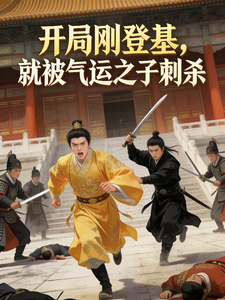
e bizarre and supernatural had descended. The previous emperor was a thoroughgoing tyrant; no longer satisfied with human women, he had set his sights on a stunningly beautiful supernatural entity. He met his end in his bedchamber, drained of all his vital essence. As the legitimate eldest son and crown prince, Wang Hao was thus hastily enthroned, becoming the young emperor of the Great Zhou Dynasty. No sooner had he awakened the "Imperial Sign-In Intelligence System" than he was assassinated by a Son of Destiny—a classic villain's opening. The Great Zhou, ravaged by the former emperor's excesses, was in national decline. The great families within its borders harbored their own treacherous schemes, martial sects began to defy the imperial court's decrees, and border armies, their pay and provisions in arrears, grumbled incessantly against the central government. Fortunately, the central capital was still held secure by the half-million Imperial Guards and fifty thousand Imperial Forest Army who obeyed the court's orders, along with the royal family's hidden reserves of power, barely managing to suppress the realm. As the Great Zhou's finances worsened and supernatural activities grew ever more frequent, the court sat atop a volcano. Ambitious plotters everywhere dreamed of overthrowing the dynasty, and even some reclusive ancient powers emerged, attempting to sway the tides of the world. At the first grand court assembly, the civil and military officials nearly came to blows, fighting tooth and nail over the allocation of fifty million taels of silver from the summer tax revenues. The spectacle opened Wang Hao's eyes—the Great Zhou's bureaucracy was not only corrupt but also martially proficient, a cabinet of all-rounders. Some officials even had the audacity to suggest the emperor release funds from the imperial privy purse to address the emergency. Wang Hao suddenly felt weary. Let it all burn.
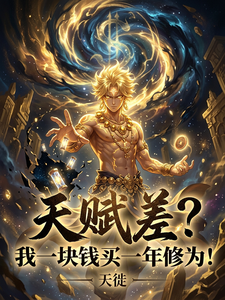
ut it can buy an entire year of absolutely perfect training results! Su Yu stared at his empty wallet and decisively opened up various online loan platforms. “Borrow a thousand bucks! Recharge my vitality!” Boom! His vitality broke a hundred points, shattering the limits of the human body! “Borrow ten thousand bucks! Recharge my combat skills!” Boom! A basic punching technique so common it was everywhere instantly maxed out, revealing the ultimate assassination technique of Five Elements Unity—Inner Force! When a rich kid hired assassins for a midnight ambush, aiming to break both of his legs, they instead ran headfirst into a monster—a human-shaped tyrannosaur, brimming with dragon-like vitality. With just two fingers, Su Yu snapped a steel staff reinforced with alloy. Staring at the killer’s stash of stolen cash—a staggering quarter-million dollars—he showed a corporate-sincere smile: “Thanks for the pre-exam gift pack, Mr. Zhao! I’m gonna go re-invest this!” Three days later, at the National Martial Arts College Entrance Exam, while everyone else struggled just to reach the passing line, Su Yu threw a single punch—and more than a thousand vitality points literally detonated the entire arena!