
"Great Martial World" established the concept of the metaverse in just two months.
The in-game gold and silver are eagerly bought by countless wealthy players and big spenders.
The exchange rate is roughly one copper coin for one real-world dollar.
And the trend suggests it will only rise further.
The currency system isn’t overly complicated. The nine dynasties in the game are all at their peak, so inflation hasn’t yet devalued the money.
Most conversions follow this logic: one tael of gold equals eight to ten taels of silver, which equals ten strings of copper coins—or ten thousand copper coins in total.
As for what money can do in the game? The possibilities are endless. Even a casual meal with an NPC costs dozens of copper coins—and that’s on the cheaper side.
If you visit a high-end establishment, a few taels of silver might disappear in one sitting.
And then there are brothels.
Weapons.
Clothing.
Property.
"Great Martial World" is a complete universe—how can you survive without money?
Not to mention the flood of martial arts manuals available. Many beginner-level techniques can be bought in ordinary county towns, starting at a hundred copper coins at the very least.
Luckier players might find a sect to join and learn from a master.
But…
Even joining a sect requires money—at least enough for travel expenses.
So, "Great Martial World" is essentially a new world. There aren’t many main quests, or even any quests at all, really.
If there are, they’re more like building relationships with NPCs—just like in real life. You make a friend, they get into trouble, you help them out, and if you’re lucky, they’ll thank you.
If you’re unlucky, you might end up making enemies instead.
That’s how realistic it is.
…
However.
What none of the players know is this:
There are quests in these nine provinces—each one has its own storyline.
They just haven’t been unlocked yet.
Cao Cheng, in his dreams, had read countless martial arts novels from Earth. Every story he saw, he remembered word for word.
Then he added them to "Great Martial World," letting the Core of the Pivot Realm shape them into quests.
Many of these novels don’t exist on Blue Star, so no one has any idea what’s coming.
For example, in the Song Dynasty region, there’s a constant war with the Yuan Dynasty—and there, you’ll find Guo Jing and Huang Rong.
But…
The players don’t know who Guo Jing is. Or Huang Rong.
They haven’t reached that level yet.
Occasionally, some might hear rumors—like how a great hero is fighting a desperate battle against the Yuan Dynasty at the border—but it’s just a name to them.
Then there’s the siege of Bright Peak, Zhang Wuji’s dramatic moments…
All these stories exist.
They’re just not active yet.
Right now, there are too few players. The map hasn’t been fully explored, and even the dynasties ruling each province aren’t fully understood. The storylines won’t trigger until the world is more developed.
At the very least, players need to grasp the bigger picture.
Or until a significant number of top-tier experts emerge among them.
For now, it’s just the growth phase.
…
Look at the current state of things.
Most players are still struggling to afford three meals a day.
But some have already mastered the skills of rooftop thieves and sky-soaring bandits.
That means they’ve learned impressive lightness techniques.
That’s the gap right there.
Honestly, if someone couldn’t make it in Blue Star, they probably won’t do much better in "Great Martial World."
At best, the game lets them take more risks without fear of death, maybe earning a little cash in the process.
Even working odd jobs… grinding for a few taels of silver each month translates to a few thousand real-world dollars.
That’s already more comfortable than most real-world jobs.
But as the saying goes:
If you’re no good, you’re no good anywhere.
Out of millions of players, the ones rising to the top are either big spenders or people who were already doing well in real life—or at least had ambition.
In reality, many have ideas but no drive.
The game’s advantage is that it pushes even those without real-world discipline to act decisively in-game.
That’s where the chance to turn fate around comes in.
…
…
With "Great Martial World’s" explosive popularity,
other game companies are kicking themselves.
They hold endless meetings, scrambling for solutions.
They used to think their games were solid—driving sims, flight sims, designs so accurate even professionals praised them.
After all, players could learn real-world skills like driving in-game.
But then "Great Martial World" arrived… and suddenly, their games became mere utilities.
Only people actively trying to learn a skill would log in for a quick session.
Then they’d rush back to "Great Martial World."
It’s not that "Great Martial World" is inherently more fun.
In fact, its realism can make it tedious at times.
But it doesn’t matter—because "Great Martial World" lets players earn money.
Money they can sell to gold farmers, matching real-world wages.
Not to mention the game enhances physical fitness through martial arts training.
No other game can compete with that.
So now,
all the major studios are banding together to develop a new metaverse game.
It can’t be wuxia-themed—that would mean direct competition with "Great Martial World."
Normally, competition wouldn’t be a problem. But Cao Cheng holds all the cards—he controls the game helmet platform. Cross him, and he can simply block your game from accessing it.
These companies know that. So their alliance isn’t rebellion—it’s an attempt to collaborate on something similar.
A game where players can earn money, learn skills—maybe combat-focused, maybe urban-themed.
Anything, as long as it’s fresh.
They believe there’s still time. Only a few million helmets have been sold—the market is far from saturated.
Overseas expansion hasn’t even begun.
Meaning, any game they develop now is practically guaranteed to turn a profit.
…
…
Cao Cheng is currently reviewing the monthly report.
The game metrics are in.
Helmets distributed to the military aren’t counted—their daily activity is stable, and their training simulations are separate from the civilian version.
So the data reflects "Great Martial World" alone.
Around two million daily active users.
That’s 80% of all helmets sold.
The remaining 10% are scattered across other games, with a batch "missing"—either dismantled or smuggled abroad.
Not unexpected.
Cao Cheng scans the report. It’s clear:
Out of three million helmets sold, only 2.9 million have been activated for gameplay.
A few thousand remain unaccounted for.
…
Cao Cheng sets down the report and sips his tea.
Beside him stands a silent woman—Secretary Li.
She’s Old Cao’s assistant, on loan from Ren's mother’s team at Miracle Real Estate.
Once Cao Cheng finishes, Secretary Li speaks softly:
"Several foreign companies have reached out, hoping to introduce the game helmets to their markets."
Cao Cheng waves a hand.
"It’s only been two months. Let them wait. Secretary Li, from now on, only bring me reports if there’s an emergency."
"Understood, Mr. Cao." Secretary Li was no spring chicken—in her forties, efficient and professional, though not particularly attractive.
Otherwise, Ren's mother wouldn't have assigned her to Old Cao. What if something inappropriate happened?

m back to his original world. In the end, he realized he had overthought things. [Hey, why is Shen Manni, the female lead, acting strange? Shouldn't she be fawning over the male lead at this point?] [Zhou Qiaoqiao, are you sick? Weren't you supposed to break off your engagement today?] [Damn it! An Youyi, please do your job as an undercover agent and sell my information to the protagonist, you idiot!] ... At this moment, Xu Mo himself didn't know that these female leads had already heard his inner thoughts. Then they decided not to play by the rules. Xu Mo: Please respect my profession as the big villain!

ts me of treason?" "Correct. The host must return to the capital and gradually build up influence." "Wait—I have half a million soldiers, and you want me to go back to the capital to 'build influence'?" "Host, you are currently the Northern Garrison General, loyal to the Great Xia Dynasty." "Of course I am loyal to Great Xia! Absolutely loyal!" "But you keep referring to yourself as 'We'..." "Never mind the details! Summon all the regional commanders and military officers! We suspect treacherous officials are manipulating the court! They shall march with Us to the capital and purge the corrupt!" "......"
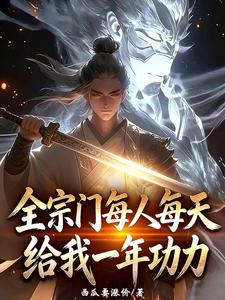
transmigrates into the world as the sect master of the Heavenly Yan Sect, which is on the verge of being wiped out. He binds a system that grants him cultivation power based on the number of disciples he has: for each disciple, he automatically gains a year's worth of cultivation every single day! Take one disciple: every day he gains 1 year of cultivation power. While others struggle through a year of bitter training, he gets the same just by sleeping through a single night. Take ten disciples: every day he gains 10 years of cultivation power. Foundation Establishment, Core Formation, Nascent Soul—he breezes through all bottlenecks without lifting a finger. Take one hundred disciples: every day he gains 100 years of cultivation power. Even a Soul Transformation Venerable before him can’t survive a single blow. Take ten thousand disciples: every day he gains 10,000 years of cultivation power! With a wave of his hand, he topples empires. With a single step, he crushes the sacred grounds of the universe. ... While others fight tooth and nail for secret techniques, Lin Yan casually hands out Nascent Soul-level cultivation manuals as beginner textbooks. While others strain to find talented recruits, Lin Yan opens his doors to anyone—so long as they’re human. In just three short years, the Heavenly Yan Sect went from a backwater sect made up of three crumbling huts to a sacred land that every cultivator under heaven would kill to enter. ... One day, otherworldly demon gods invade, with a million demon soldiers pressing down upon the realm. Lin Yan, yawning, rises from his lounge chair and glances at the system panel: [Current Disciples: 1.28 million] [Daily Cultivation Increase: 1.28 million years] He waves his hand casually, and the countless demon soldiers are reduced to ashes in an instant. “So noisy… interrupting my fishing.”
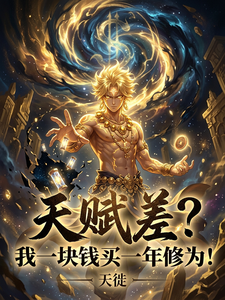
ut it can buy an entire year of absolutely perfect training results! Su Yu stared at his empty wallet and decisively opened up various online loan platforms. “Borrow a thousand bucks! Recharge my vitality!” Boom! His vitality broke a hundred points, shattering the limits of the human body! “Borrow ten thousand bucks! Recharge my combat skills!” Boom! A basic punching technique so common it was everywhere instantly maxed out, revealing the ultimate assassination technique of Five Elements Unity—Inner Force! When a rich kid hired assassins for a midnight ambush, aiming to break both of his legs, they instead ran headfirst into a monster—a human-shaped tyrannosaur, brimming with dragon-like vitality. With just two fingers, Su Yu snapped a steel staff reinforced with alloy. Staring at the killer’s stash of stolen cash—a staggering quarter-million dollars—he showed a corporate-sincere smile: “Thanks for the pre-exam gift pack, Mr. Zhao! I’m gonna go re-invest this!” Three days later, at the National Martial Arts College Entrance Exam, while everyone else struggled just to reach the passing line, Su Yu threw a single punch—and more than a thousand vitality points literally detonated the entire arena!