
So,
the higher-ups established a new department in response to this matter.
Similar to a psychological counseling unit, it also functioned as a political work division.
They would periodically conduct random checks on soldiers within the ranks,
providing psychological guidance and follow-up monitoring.
Eventually, everyone realized that very few people actually became psychologically disturbed due to killing—
especially in a game like PlayerUnknown’s Battlegrounds.
Most soldiers understood it was just a game, treating it as part of their daily training. No one genuinely believed they were actually killing their comrades.
Naturally, this meant psychological issues rarely arose.
This was one of the benefits of gaming.
Of course, there were still a handful who might become deranged in real life because of games—but they were the exception.
For instance, in a dream, Young Master Cao had once seen news reports about older Legend-style games where players slashed enemies and monsters.
Some immature children, lacking proper judgment, ended up developing murderous tendencies, leading to real-life violent incidents.
Movies like Young and Dangerous could also negatively influence the younger generation.
But,
these cases were far from the majority, and they were relatively easy to manage.
Thus,
the game helmet policy also restricted access to those under sixteen.
At the very least, players had to be in high school, where they’d developed some ability to distinguish right from wrong.
Coupled with the demanding academic workload in high school, many families wouldn’t allow their kids to play anyway. As a result, very few players nowadays were below college age.
If there were any, they were mostly rich kids.
……
After discussing this for a while,
the conversation shifted to international affairs.
Countries that maintained good relations with their own had already set up 5G networks and power systems, all built by their domestic infrastructure companies.
This meant the basic requirements for using the game helmets had been met.
Representatives from these nations had also arrived, requesting the introduction of the game helmets.
Several regulatory authorities had personally reached out to Old Cao’s side, but this wasn’t something Old Cao could decide—only Young Master Cao had the authority to grant permission.
Since the department heads couldn’t locate Young Master Cao directly, they had to take a roundabout approach and contact his father-in-law instead.
“Sure, no problem.”
Upon hearing this, Cao Cheng nodded slowly. “There’s no issue with exporting them. I’ll talk to Old Cao later and have him handle the negotiations.”
“Honestly,”
Cao Cheng smirked, “the whole point of Great Wuxia was cultural promotion. Otherwise, why would I bother creating so many historical dynasties? I could’ve just made up a fictional setting—it’d have been way simpler.”
“Now that they’re practically begging for our cultural exports, we might as well oblige. After all, we’re on good terms.”
Hearing this, his father-in-law chuckled.
He had also recognized this underlying intention, which was why he’d personally summoned Cao Cheng.
Initially, he’d thought Cao Cheng was deliberately avoiding the regulatory departments, unwilling to export the helmets.
Now, it seemed he’d overthought it.
This kid was always thinking three steps ahead. Creating Great Wuxia had clearly been part of a calculated plan.
……
The matter was settled quickly.
With Young Master Cao’s approval, Old Cao wasted no time.
Led by several regulatory bodies, along with representatives and business figures from various countries, over a dozen cooperation agreements were signed within a week.
Mutual benefit, after all.
Soon after, the first batch of helmets was shipped out—two million units distributed across eight nations.
This immediately caused a stir internationally.
After all, these things were being scalped for astronomical prices back home.
Domestically, the resale price had dropped to around 170,000 yuan.
But in some developed countries overseas, they were still selling for tens of thousands of dollars.
The profit margin was enough to make anyone’s eyes turn red.
Unfortunately,
small-time scalpers back home couldn’t smuggle the helmets abroad, so they had to settle for making modest profits domestically.
……
But now,
the game helmets were officially being exported for the first time.
And not just to one or two countries—eight nations at once, with two million units shipped out.
Countries that hadn’t secured any imports, like America and several leading European nations, immediately voiced their displeasure.
Their citizens, in particular, were furious.
Some even took to the streets in protest.
Talk about having too much free time.
The backlash quickly reached the higher-ups.
During an international press conference, when questioned by foreign media, the official response was: “Miracle Group’s actions fall entirely within standard commercial operations. They violate no laws or regulations. The helmets are merely products, and our regulatory bodies will not force Miracle Group to trade—or refuse to trade—with any party… Next question!”
After the government’s statement,
Miracle Group also released a lengthy post.
But the core message was simple:
“It’s not that we won’t sell to you—it’s that your infrastructure can’t even handle it.”
“No nationwide 5G? What are you gonna do, use them as motorcycle helmets?”
“Pfft.”
“Seriously, it’s not us—it’s you.”
The official wording was more diplomatic, but that was the gist.
To drive the point home, Old Cao even gave an interview where he didn’t mince words: Damn, if you can’t even meet the basic requirements, why bother pretending?
It’s just embarrassing.
This outright shattered some people’s egos.
Certain human rights organizations sued Miracle Group for discrimination—
racial discrimination, to be exact.
Miracle Group ignored them completely.
As for fines? They had no intention of paying.
Worst-case scenario, they’d just pull out of those markets altogether.
That was the beauty of Miracle Group—their products were always in demand. They never had to beg anyone to buy them.
Just look at the past battles with Miracle Cosmetics.
Hadn’t they walked away victorious every single time?
If they really withdrew, those countries would be the ones regretting it.
……
In the end,
the whole uproar lasted over a month before finally dying down.
However,
it wasn’t long before another wave of international criticism emerged.
This time, the complaint was that Great Wuxia was too culturally specific, making it hard for foreign players to relate.
After all, they were of different ethnicities,
religions,
and belief systems.
While the game was fun and offered personal growth,
it still felt uncomfortable to play.
At first, it wasn’t a big deal. But then international organizations seized the opportunity to demand that Miracle Group expand the game’s content.
Since the setting was ancient China,
they argued, why not include Western history too? Ancient Rome, for example…
On the surface, the request seemed reasonable.
Even many domestic fans didn’t see an issue with it.
But Miracle Group’s response was immediate: Play it or leave it.
Fans were stunned.
“Holy crap, did Gen Z take over PR?”
“That tone is 100% a Zoomer spokesperson.”
“This is hilariously savage…”
“I love it.”
……
The statement instantly set social media ablaze.
Foreign outlets screenshotted it and used it to smear Miracle Group.
But the post remained pinned on their official website,
a bold testament to the company’s unyielding stance.
Damn right.
This was meant to be cultural export—did they really expect other cultures to be included?
Why don’t you just ask for the moon while you’re at it?
At the same time,
Miracle Group held a press conference to address the issue.
The spokesperson was young.
The moment they stepped on stage, camera flashes erupted nonstop.
After a long pause, the young man finally spoke up: "I am Du Long, the media spokesperson for Miracle Group. The 'Six-Word Mantra' posted earlier was from me. Feel free to ask any questions—let's start with you."
Du Long pointed at the American reporter.

ts me of treason?" "Correct. The host must return to the capital and gradually build up influence." "Wait—I have half a million soldiers, and you want me to go back to the capital to 'build influence'?" "Host, you are currently the Northern Garrison General, loyal to the Great Xia Dynasty." "Of course I am loyal to Great Xia! Absolutely loyal!" "But you keep referring to yourself as 'We'..." "Never mind the details! Summon all the regional commanders and military officers! We suspect treacherous officials are manipulating the court! They shall march with Us to the capital and purge the corrupt!" "......"

] This is a dark fantasy-themed dating simulation game. The main gameplay involves containing various monster girls and investigating the truth of a world shrouded in mist alongside your companions. However, due to his love for the dark and bizarre atmosphere, Luo Wei ended up turning a dating game into a detective mystery game. Women? Women only slow down his quickdraw! To Luo Wei, the female leads in the game are more like tools to perfectly clear levels and squeeze out rewards. For Luo Wei, flirting with every girl he meets and then discarding them is standard procedure. Worried about characters losing affection points? No need. With his maxed-out charm stat, Luo Wei is practically a "human incubus." A little psychological manipulation and those points come right back. It's a bit scummy, but the paper cutout heroines in the game won't actually come at him with real cleavers. However... Luo Wei has transmigrated. He's accidentally entered the second playthrough of this game. His past actions have caused all the girls to transform into terrifying yanderes. Due to the game's setting, most of the heroines he once contained are "troubled girls." Obsessive, twisted, mentally unstable, all aggressive yanderes... The type who will kill you if they can't have you... Luo Wei wants to cry but has no tears left. "I really just want to survive..." In short, this is a story of battling wits and engaging in a love-hate relationship with yanderes.
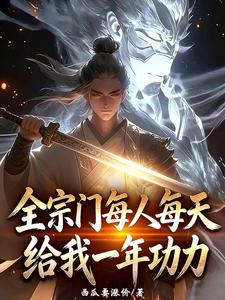
transmigrates into the world as the sect master of the Heavenly Yan Sect, which is on the verge of being wiped out. He binds a system that grants him cultivation power based on the number of disciples he has: for each disciple, he automatically gains a year's worth of cultivation every single day! Take one disciple: every day he gains 1 year of cultivation power. While others struggle through a year of bitter training, he gets the same just by sleeping through a single night. Take ten disciples: every day he gains 10 years of cultivation power. Foundation Establishment, Core Formation, Nascent Soul—he breezes through all bottlenecks without lifting a finger. Take one hundred disciples: every day he gains 100 years of cultivation power. Even a Soul Transformation Venerable before him can’t survive a single blow. Take ten thousand disciples: every day he gains 10,000 years of cultivation power! With a wave of his hand, he topples empires. With a single step, he crushes the sacred grounds of the universe. ... While others fight tooth and nail for secret techniques, Lin Yan casually hands out Nascent Soul-level cultivation manuals as beginner textbooks. While others strain to find talented recruits, Lin Yan opens his doors to anyone—so long as they’re human. In just three short years, the Heavenly Yan Sect went from a backwater sect made up of three crumbling huts to a sacred land that every cultivator under heaven would kill to enter. ... One day, otherworldly demon gods invade, with a million demon soldiers pressing down upon the realm. Lin Yan, yawning, rises from his lounge chair and glances at the system panel: [Current Disciples: 1.28 million] [Daily Cultivation Increase: 1.28 million years] He waves his hand casually, and the countless demon soldiers are reduced to ashes in an instant. “So noisy… interrupting my fishing.”
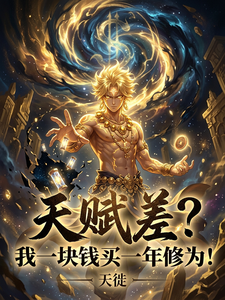
ut it can buy an entire year of absolutely perfect training results! Su Yu stared at his empty wallet and decisively opened up various online loan platforms. “Borrow a thousand bucks! Recharge my vitality!” Boom! His vitality broke a hundred points, shattering the limits of the human body! “Borrow ten thousand bucks! Recharge my combat skills!” Boom! A basic punching technique so common it was everywhere instantly maxed out, revealing the ultimate assassination technique of Five Elements Unity—Inner Force! When a rich kid hired assassins for a midnight ambush, aiming to break both of his legs, they instead ran headfirst into a monster—a human-shaped tyrannosaur, brimming with dragon-like vitality. With just two fingers, Su Yu snapped a steel staff reinforced with alloy. Staring at the killer’s stash of stolen cash—a staggering quarter-million dollars—he showed a corporate-sincere smile: “Thanks for the pre-exam gift pack, Mr. Zhao! I’m gonna go re-invest this!” Three days later, at the National Martial Arts College Entrance Exam, while everyone else struggled just to reach the passing line, Su Yu threw a single punch—and more than a thousand vitality points literally detonated the entire arena!