
The timeline in Blue Star was quite similar to that of the dream world.
Only some minor details differed.
And Young Master Cao had no intention of deliberately accelerating the progression of the timeline.
Because he understood very well that foresight gave him an advantage—the less he changed, the better his life would be.
But that wasn’t the main reason.
The main reason was that for Cao Cheng alone to alter the course of an entire world and speed up its development was far too difficult and exhausting.
Even with a system at his disposal, it was still an incredibly daunting task.
Especially when it came to technology.
Take this as an example: if you traveled back to ancient times, say the Tang Dynasty, and happened to know a bit about technology, wouldn’t it seem simple to invent a spinning jenny or a power loom in that era?
But here’s the problem.
The trouble begins.
With a broken technological chain and a missing technical ecosystem, trying to introduce modern textile machinery to suppress fabric prices and benefit the masses in that era would be pure fantasy.
First of all, inventions like the spinning jenny or water-powered looms were products of the industrial age, requiring a complete technological infrastructure.
The material challenges alone were immense—iron smelting, steel refining, precision gears, bearings, rubber conveyor belts… and so on!
This was a matter of upstream and downstream industrial chains.
Then there was the power system, whether hydraulic or steam, which required supporting infrastructure like water conservancy projects or steam technology.
No commercial technology exists in isolation.
The same applies to the modern era. Despite its apparent advancement, introducing futuristic technology now would still face significant hurdles.
Take this gaming helmet, for instance. Would it have been useful if introduced ten years ago?
Absolutely not.
Forget about the rest—5G didn’t even exist back then.
Want to connect to the internet? Forget it.
Of course,
if the system cheated hard enough to provide an entire industrial chain, it might work, but there would still be countless issues.
Take the loom, for example.
Even if the system solved the problems of steel, bearings, precision gears, rubber, hydraulic power, and steam, an even bigger challenge would arise.
Cotton ginning technology, dyeing techniques for fabrics, post-weaving processes…
To put it bluntly, without widespread cotton cultivation techniques, such a loom would be practically useless.
So,
to truly benefit the people, you’d also need to solve problems like cotton breeding, farming, and ginning to ensure a steady supply of raw materials.
Not to mention the resistance from local interest groups.
And it’s not just bureaucratic opposition.
There’s also pushback from the grassroots.
If you succeeded in introducing high-tech machinery, countless traditional artisans would lose their livelihoods.
That era wasn’t like modern times.
Many crafts were passed down through generations, and losing their trade meant starvation.
The emergence of something entirely new requires reform.
Only the scale of reform differs.
……
Long story short,
it’s just too much trouble.
This is why Cao Cheng didn’t want to interfere with the timeline.
Leaving it untouched benefited him.
Meddling with it brought no advantage—only exhaustion.
Any rational person would choose not to act.
Besides,
given how the timeline was progressing, the Eastern District would inevitably rise to the top eventually. Why bother intervening?
If something unexpected happened and disrupted the natural course… it might even backfire.
That would be disastrous!
……
So,
whether it was the Immortality Club or other technologies, Cao Cheng remained restrained.
He didn’t reveal everything.
Otherwise, the Immortality Club wouldn’t have remained stagnant for years with little progress.
If he really wanted to push for development, Cao Cheng could become the most powerful person on the planet within a year.
He could even recruit a bunch of foreign lackeys.
But he chose not to…
What’s the point of foreign lackeys? They stink.
As for the current gaming helmet,
it’s not a big deal.
At its core, it’s just a game.
Only slightly more advanced than the average one.
A handful of people could sense its potential threat.
But even if they knew the gaming helmet might pose risks to their industries or even their nations…
the immediate benefits were too tempting to ignore.
Especially for capitalists—they couldn’t care less about national interests. All they cared about was how much money this game could make them!
……
……
When various gaming companies began promoting virtual reality games, fans were stunned at first.
Then, within moments, the topic skyrocketed to the top of trending lists.
Excitement was through the roof.
Even those who didn’t usually play games—middle-aged folks drowning in stress—took the time to check it out.
“Holy sht~~~ Is this for real~~~ cutting-edge tech?”
“Gaming helmets are actually a thing now?”
“I just read a VRMMO novel, and now… this? Am I the protagonist? Where’s my cheat ability?”
“You’re just an NPC—why would you need a cheat?”
“Damn…”
Within just a few days,
everyone knew about it—whether they wanted to or not.
To put it simply, the hype never died down.
Every hour, every minute, people were scouring the internet for details or posting questions.
Some asked about the price.
Others, inspired by VRMMO novels, wondered if becoming a god in the game would make them a god in real life.
There were even questions about whether in-game currency could be exchanged one-to-one with real money.
After all, that’s how most gaming novels portrayed it.
In those stories, the game became life itself—players could earn salaries just by joining a guild.
Some asked about the realism of the experience.
Would doing that in the game feel just as good in the brain?
Or would they… finish in real life too?
In short…
No question was too bizarre.
The sheer enthusiasm made it clear—once the game launched and the helmets went on sale, it would trigger a buying frenzy.
……
……
Fortunately,
Cao Cheng didn’t keep people waiting too long.
After the initial marketing blitz, the hype still hadn’t faded after about ten days.
Then came the day—
The online press conference.
This event had no physical venue and no invited guests.
It was simpler this way.
After all, it was just a product launch.
Call it a press conference, but wasn’t it just glorified live-streamed sales?
Cao Cheng saw no difference.
8:30 PM.
The livestream began.
Multiple streams were set up to prevent lag from overwhelming traffic.
Thirty-eight channels in total.
Each with a slightly different angle.
But all focused on the same screen.
……
This time, Young Master Cao made a personal appearance.
Adding more prestige to the helmet’s launch.
The screen flooded with comments like “Hubby’s here!”
Even the trolls held back.
Cao Cheng opened with a brief introduction.
“Today’s event is a bit rough around the edges… and somewhat rushed.”
“Originally, I planned to hold it after the New Year, once everyone had celebrated properly—a proper offline event, inviting industry peers, partners, and some fans to attend in person…”
“But.”
“We’ve seen your excitement over the past few days.”
"So after discussing it among us mid-level managers, we figured selling sooner or later makes no difference... Since everyone’s eager to know, we’ve decided to launch sales today."
"That’s also why today’s announcement is being held online—a bit rushed, but we hope you’ll understand."
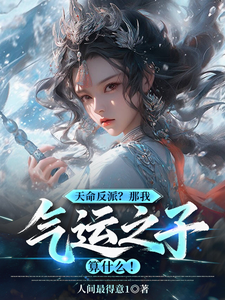
for mindless slaughter, this isn't for you.] My name is Ye Shu, and I'm a transmigrator. It seems I'm supposed to be the protagonist, but that feels pretty unlikely. This world has been invaded by a system. The antagonists on the other side have suddenly become pure, flawless saints. The female leads have been force-fed the so-called "original plot," making them think they've been reborn. Now, everyone thinks I'm scum. Including the old lady in my ring. And here I am, in the Monster Beast Mountain Range, braising pork. To put my situation in perspective— It's as if, the moment Xiao Yan stepped into the Monster Beast Mountain Range, the Soul Emperor already knew he would become the Flame Emperor, and Yao Lao had been turned to the enemy's side. I have nothing right now. Oh wait, that's not true. I do have a white-haired loli child-bride who's the Heavenly Dao, and her only skill is acting cute. So, tell me guys... what are my chances of making it to the end?

ts me of treason?" "Correct. The host must return to the capital and gradually build up influence." "Wait—I have half a million soldiers, and you want me to go back to the capital to 'build influence'?" "Host, you are currently the Northern Garrison General, loyal to the Great Xia Dynasty." "Of course I am loyal to Great Xia! Absolutely loyal!" "But you keep referring to yourself as 'We'..." "Never mind the details! Summon all the regional commanders and military officers! We suspect treacherous officials are manipulating the court! They shall march with Us to the capital and purge the corrupt!" "......"

lanned to earn money steadily and take life at a slower pace. But he never expected... his father's remarriage, and the stepmother bringing along a dependent, would completely disrupt his life's plans...
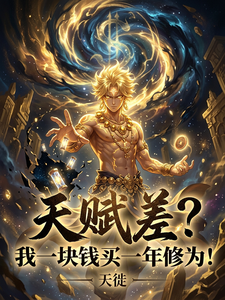
ut it can buy an entire year of absolutely perfect training results! Su Yu stared at his empty wallet and decisively opened up various online loan platforms. “Borrow a thousand bucks! Recharge my vitality!” Boom! His vitality broke a hundred points, shattering the limits of the human body! “Borrow ten thousand bucks! Recharge my combat skills!” Boom! A basic punching technique so common it was everywhere instantly maxed out, revealing the ultimate assassination technique of Five Elements Unity—Inner Force! When a rich kid hired assassins for a midnight ambush, aiming to break both of his legs, they instead ran headfirst into a monster—a human-shaped tyrannosaur, brimming with dragon-like vitality. With just two fingers, Su Yu snapped a steel staff reinforced with alloy. Staring at the killer’s stash of stolen cash—a staggering quarter-million dollars—he showed a corporate-sincere smile: “Thanks for the pre-exam gift pack, Mr. Zhao! I’m gonna go re-invest this!” Three days later, at the National Martial Arts College Entrance Exam, while everyone else struggled just to reach the passing line, Su Yu threw a single punch—and more than a thousand vitality points literally detonated the entire arena!