
For most of the past year, Cao Cheng had been busy with helmet development and the creation of a new game.
During this time, he also participated in numerous lotteries, acquiring many new technologies.
However, none of these were integrated into the core of the virtual world.
For instance, one of the technologies allowed people to play games in their dreams.
Simply put, it involved using a gaming pod where users could simulate sleep while their brains remained active in gaming or learning.
After playing all night, they would wake up the next morning feeling refreshed, as if they had slept, yet having spent the entire night learning.
It could even enable workers to labor tirelessly for 24 hours a day.
This technology would undoubtedly thrill capitalists.
But...
Such advanced technology was too groundbreaking to reveal.
How could something like this be made public?
Although...
Releasing it would make the gaming helmets even more impressive, drive up their price, and potentially make humanity utterly dependent on them.
But the consequences would be undeniable.
Fewer people would engage in real-life activities.
Businesses in the physical world would struggle more.
Those who worked or studied would no longer step outside after returning home—everything would happen in the game.
This would severely disrupt the functioning of society.
The problem would trigger a chain reaction.
It might even completely alter the fabric of society.
And it could lead to other unforeseen issues.
So,
Cao Cheng wouldn’t release this technology—at least not yet. The timing wasn’t right.
Such advancements were better suited for the era of space exploration.
Since Cao Cheng withheld this technology, gamers still experienced fatigue.
They needed breaks after playing for a while.
After all, reality remained the primary way of life; the virtual world couldn’t replace it.
......
Meanwhile,
Cao Cheng shipped nearly 100,000 units of equipment to the military every month.
Most were helmets.
Less than 1% were gaming pods.
The price difference was significant—a hundredfold gap.
Four months later,
A second factory was completed.
Production capacity multiplied.
Within the next two months, a multi-billion-dollar contract was fulfilled.
The remaining time was spent stockpiling inventory.
And right around this time,
International tensions arose, just as Old Taishan had predicted, but everything remained under control.
Cao Cheng didn’t need to worry about global affairs; his role was simply to supply the chips.
He had factories.
And technology.
He had prepared long ago.
Most of the technology wasn’t from system lotteries but acquired through the Eternal Life Club’s channels—such as lithography machines...
......
By the end of the year,
The game’s existence was exposed.
It couldn’t be kept secret any longer.
Of course,
Cao Cheng had mentally prepared for this.
After all, over half a million people had already used the gaming helmets.
Among them were his own security personnel—a group he could trust.
There were also many company employees, whose loyalty wasn’t in question.
But with so many people having families, occasional leaks were inevitable.
Then there were the soldiers.
Most were undoubtedly loyal.
But with such a large number of users, secrecy was hard to maintain.
Consider this: Even under these circumstances, the game had a daily active user count of nearly a million.
And the total number of helmets distributed or sold was just over a million.
Among the soldiers, initially, one helmet was often shared by two or three people.
Especially early on, when helmets were scarce, most soldiers had to wait in line, watching and hoping for their turn.
Later, as helmet and gaming pod production increased, most soldiers eventually had their own—standard issue.
Distribution followed a strict order: frontline troops first, then second-line units, then third-line, and so on.
So,
The user base grew increasingly diverse.
Even among soldiers, while many appeared loyal, who knew what some truly thought?
That the helmet’s existence remained hidden for six months was already beyond expectations.
Cao Cheng and Old Taishan had estimated leaks within two or three months.
Delaying it twice as long was a remarkable achievement.
It proved... that most of our people were truly dependable!
......
......
Once the news broke, Cao Cheng immediately traveled to the capital to meet with Old Taishan.
A few meetings followed—mostly formalities.
Then, in collaboration with various stakeholders, he co-founded two tech companies, contributing mainly through technology shares.
After that, Cao Cheng stepped back, leaving management to others while he waited for dividends.
Of course,
These two companies had nothing to do with the helmets—they focused on chip-related ventures.
Once everything was settled, Old Taishan privately summoned Cao Cheng to discuss the helmet situation.
"Intelligence intercepted just two days ago..."
Old Taishan handed Cao Cheng a file.
Without ceremony, Cao Cheng skimmed through it.
The document contained intel from operatives stationed abroad.
Information flowed freely overseas—their defenses were full of holes, like a sieve.
Aside from a few highly secure locations, operatives could usually obtain whatever they wanted with minimal effort.
So,
Once foreign forces got wind of the gaming helmets, rumors spread like wildfire. The operatives embedded there couldn’t miss it.
But these operatives were sharp.
Seeing no public discussions or online leaks about the helmets, they immediately recognized it as classified intel from their homeland.
That very night, the operative compiled a detailed report and sent it back.
After two more days of digging, the file was complete.
......
The report was clear:
Foreign entities, after months of investigation, had confirmed that soldiers in the Eastern District were all using gaming helmets.
From the intel they gathered, they knew quite a bit.
They knew the game used neural feedback for training.
That it enhanced real-world combat skills and physical capabilities.
Exactly how much it improved individual combat effectiveness remained unclear—no precise data yet.
But,
Based on intel from their moles, they were certain the gaming helmet was a revolutionary invention.
Its emergence could change everything.
Additionally,
Foreign forces had traced the technology back to the gaming division of Miracle Group.
In other words, the mastermind behind the gaming helmet was—Cao Cheng!
The target was identified.
Yet no one had made a move against him—whether through force or subtle recruitment, they held back for now.
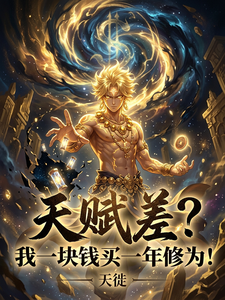
ut it can buy an entire year of absolutely perfect training results! Su Yu stared at his empty wallet and decisively opened up various online loan platforms. “Borrow a thousand bucks! Recharge my vitality!” Boom! His vitality broke a hundred points, shattering the limits of the human body! “Borrow ten thousand bucks! Recharge my combat skills!” Boom! A basic punching technique so common it was everywhere instantly maxed out, revealing the ultimate assassination technique of Five Elements Unity—Inner Force! When a rich kid hired assassins for a midnight ambush, aiming to break both of his legs, they instead ran headfirst into a monster—a human-shaped tyrannosaur, brimming with dragon-like vitality. With just two fingers, Su Yu snapped a steel staff reinforced with alloy. Staring at the killer’s stash of stolen cash—a staggering quarter-million dollars—he showed a corporate-sincere smile: “Thanks for the pre-exam gift pack, Mr. Zhao! I’m gonna go re-invest this!” Three days later, at the National Martial Arts College Entrance Exam, while everyone else struggled just to reach the passing line, Su Yu threw a single punch—and more than a thousand vitality points literally detonated the entire arena!

ts me of treason?" "Correct. The host must return to the capital and gradually build up influence." "Wait—I have half a million soldiers, and you want me to go back to the capital to 'build influence'?" "Host, you are currently the Northern Garrison General, loyal to the Great Xia Dynasty." "Of course I am loyal to Great Xia! Absolutely loyal!" "But you keep referring to yourself as 'We'..." "Never mind the details! Summon all the regional commanders and military officers! We suspect treacherous officials are manipulating the court! They shall march with Us to the capital and purge the corrupt!" "......"
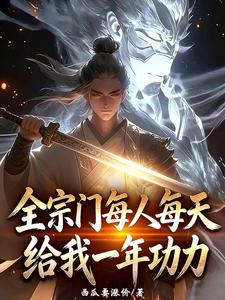
transmigrates into the world as the sect master of the Heavenly Yan Sect, which is on the verge of being wiped out. He binds a system that grants him cultivation power based on the number of disciples he has: for each disciple, he automatically gains a year's worth of cultivation every single day! Take one disciple: every day he gains 1 year of cultivation power. While others struggle through a year of bitter training, he gets the same just by sleeping through a single night. Take ten disciples: every day he gains 10 years of cultivation power. Foundation Establishment, Core Formation, Nascent Soul—he breezes through all bottlenecks without lifting a finger. Take one hundred disciples: every day he gains 100 years of cultivation power. Even a Soul Transformation Venerable before him can’t survive a single blow. Take ten thousand disciples: every day he gains 10,000 years of cultivation power! With a wave of his hand, he topples empires. With a single step, he crushes the sacred grounds of the universe. ... While others fight tooth and nail for secret techniques, Lin Yan casually hands out Nascent Soul-level cultivation manuals as beginner textbooks. While others strain to find talented recruits, Lin Yan opens his doors to anyone—so long as they’re human. In just three short years, the Heavenly Yan Sect went from a backwater sect made up of three crumbling huts to a sacred land that every cultivator under heaven would kill to enter. ... One day, otherworldly demon gods invade, with a million demon soldiers pressing down upon the realm. Lin Yan, yawning, rises from his lounge chair and glances at the system panel: [Current Disciples: 1.28 million] [Daily Cultivation Increase: 1.28 million years] He waves his hand casually, and the countless demon soldiers are reduced to ashes in an instant. “So noisy… interrupting my fishing.”

pression Bureau] Transported to a fantasy world overrun by demons and monsters, Gu Qingfeng becomes a jailer in the Demon Suppression Prison of the Great Yan Dynasty's Demon Suppression Bureau. From this point on, bizarre cases frequently occur in the Demon Suppression Prison, once known as hell on earth and infamous for its gloomy, terrifying atmosphere! Why do the demons and monsters in the prison wail miserably every night? Why has the corpse demon, capable of transforming into various beauties, donned black stockings and switched careers to become a foot massage therapist? Why has the eye demon, expert in soul-snatching and illusions, turned into a VR headset? Why is the fox spirit performing otaku dances? Are all these occurrences a twisted expression of demonic nature, or a descent into moral depravity? After peeling away layer upon layer of mystery, all clues ultimately point to a jailer named Gu Qingfeng. Gu Qingfeng: "Hehehe... My dear demons and monsters, whose card shall we flip today?"