
And so it went.
Constant battles, constant troubleshooting, constant inquiries...
Along the way, another hundred employees from the company were brought in.
This time, they weren’t from the security firm but were instead selected from Miracle Group—men and women, some even with pre-existing conditions.
But they all signed confidentiality agreements.
...
A full month passed like this.
Most of the testing was completed.
No major issues were found.
Even people with heart conditions could use it—their heart rates just fluctuated a bit more.
To put it bluntly,
this thing was a virtual world, just like dreaming.
No one’s ever heard of someone with a heart condition dying from a nightmare.
Though the company’s medical researchers did note that nightmares could pose a risk for heart patients.
But deaths from being scared into cardiac arrest were rare.
At worst, sympathetic nerve excitement would raise certain hormones, speeding up the heart rate and causing a sudden spike in blood pressure.
And even that depended on the type of heart condition.
In short,
given the current state of the Core of the Pivot, fatal incidents were highly unlikely.
Even if they happened,
they’d be isolated cases.
But that wasn’t a big deal.
After all, this virtual space wasn’t limited to just combat.
You could even develop farming games.
Tilling the land could improve physical fitness too.
And after a month of research, people with chronic illnesses or obesity saw significant improvements—all their health metrics were trending upward.
It was remarkably effective for weight loss and disease management.
After all, severely obese people in the real world would be out of breath after just a few steps.
But in the virtual space, they could sprint like the wind—just feeling a bit tired. The neural feedback alone was immensely beneficial for them.
...
In the blink of an eye,
another month passed.
This time, they tested for chronic and age-related conditions.
All in all, the entire process took about three months.
Every test was completed.
Tens of thousands of reports were generated.
Data on the helmets’ feedback and wear-and-tear were all recorded.
Production had also finished setting up the factory, with assembly lines ready to churn out thousands of helmets daily.
There was no fear of overstocking.
Demand would far outstrip supply—no way these helmets would gather dust in a warehouse.
May arrived.
Cao Cheng finally had some downtime.
He took off the helmet, still craving more.
Trash.
They were all trash.
Twenty kills in a single match.
If only finding opponents wasn’t so slow, he’d have racked up even more.
Though his real-world physique and abilities couldn’t be fully transferred into the game, about 20% carried over.
That still made Cao Cheng a top-tier force in the virtual world.
Before this, he’d never realized just how strong he was.
Now he knew.
He was basically cheating.
Inside the virtual space, his vision, hearing, and perception were all far sharper than an average person’s.
Even his bodyguards and highly trained security personnel could barely put up a fight.
Actually taking him down? Nearly impossible.
Over the past month, Cao Cheng had only died three times.
Sounds like a lot?
Pure bad luck.
This was a "semi-realistic" battlefield—anything could happen.
Twice, he got ambushed.
Once, someone rigged a car with explosives, and he didn’t notice in time.
Another time, it was a stray bullet.
He was heading over to break up a distant firefight when—bam—a random shot hit him square in the face. Game over.
Funny thing, though.
That sensation of dying? It eerily mimicked the terror he’d felt passing away in his previous life back in 2099.
Not as intense, but still enough to jolt the soul.
Dying once changes a person.
And that’s a good thing.
Also,
this virtual world couldn’t be treated like a regular game.
In normal games, you could hop into vehicles and roam freely—cars, speedboats, motorcycles...
But here? If you dared to use one, you’d just be a loud, attention-grabbing target.
You’d get dropped in seconds.
Who knew where some sneaky bastard was hiding?
And with heavy weapons like rocket launchers in play?
Extremely dangerous.
So,
after losing two lives to vehicles, Cao Cheng avoided them entirely.
This wasn’t something you could play casually.
...
The Fourth had been playing a lot lately—this game was addictive.
And good for the body, too.
Even Old Cao was hooked.
Only Ren's mother didn’t like it. Gentle by nature, she couldn’t stand the bloodshed.
Games like farming or pet-raising would suit her better.
While pushing his game company to develop more titles, Cao Cheng also took a helmet to the capital.
...
...
"So this is the game helmet you mentioned?" His father-in-law eyed it curiously.
Cao Cheng handed him a fresh one.
Smiling, he said, "Father-in-law, I can’t promise much, but safety isn’t an issue. Three months of non-stop testing, every bit of data recorded—tens of thousands of reports. Most importantly, like I told you on the phone, about 20% feedback."
His father-in-law raised an eyebrow. "So our soldiers could just train in this thing and develop real battlefield skills and killer instinct? No more real-world drills—just gaming?"
"No, no, no..." Cao Cheng quickly shook his head. "You’ve got it wrong. The training here maxes out at 20% feedback, and that’s not a fixed rate. Some people might get less than 10%, depending on their neural response. Plus, playing too long leads to fatigue—balance is key."
"Besides..."
"Virtual training at 20% can’t compare to real-world training at 100%."
"So physical drills are still essential. But in-game, they can sharpen their killer instinct—get used to blood."
"In this game, the average player kills at least a few per match. Even just one adds up over time."
"That kind of accumulated lethality? Most soldiers can’t match it."
"At the very least, they’ll be desensitized to violence."
"And even if they don’t kill, dying repeatedly changes a person."
"Not quite enlightenment, but maybe a minor epiphany or two."
"Best part? The data can be adjusted via my terminal. For us, I can set it to 20% realism."
"But for exports? I’ll dial it down to 2%... or even 1%. Or remove feedback entirely."
Cao Cheng grinned mischievously.
His father-in-law shot him a sidelong glance.
The older man understood now.
Some things were too sensitive for phone calls, but here, they could speak freely.
After a moment, his father-in-law asked, "Can I try it?"
"Sure, but if you go up against a real warrior, you’ll get crushed."
"..."
Old Cao snorted coldly. "Looking down on me? I served in my youth. Come on, let’s see what you’ve got."
Cao Cheng grinned. "Alright, let’s do this."
Old Cao, oh Old Cao… today, I’ll show you who the real boss is.

iemie, male, Race: Moon. Hobby: Collecting anomalies. At first, he thought he possessed two systems: the Crimson Rainbow Moon and the Clear Cold Frost Moon. One day, he discovered that he himself could also become a system for others, holding the chessboard of fate. The Eighth Epoch, also known as the Eternal Moon Epoch. Humans, witches, elves, bloodline descendants, specters, demons, and spirits together compose a new history. Walking the path on behalf of the moon, before he knew it, Chen Miemie's footsteps were followed by all manner of strange and wondrous anomalies. As time passed, many titles circulated about him—The King in Yellow, Lord of Anomalies, Heart of the Eternal Moon, and more. "Me? I'm just a traveler who enjoys collecting interesting creatures," Chen Miemie said.

ing gift was a patch of barren land, and disciples were all picked up along the way. He spent fifty years diligently building three "ramshackle little sects," thinking he could finally live a carefree life relying on his disciples. But right at the fifty-year mark, he was suddenly swept away by a spatial rift and exiled to the Chaos Desolation, the Disorderly Ruins. There was no spiritual energy there, only slaughter. Relying on the cultivation feedback from his disciples, Gu Changyuan hacked his way through a sea of blood for eleven hundred years. When the system finally fished him back out, he discovered the ramshackle little sects he'd built back then had developed a rather... unusual style. Hold on... I vanished for a thousand years, so how did my ramshackle little sects become holy lands?!

ts me of treason?" "Correct. The host must return to the capital and gradually build up influence." "Wait—I have half a million soldiers, and you want me to go back to the capital to 'build influence'?" "Host, you are currently the Northern Garrison General, loyal to the Great Xia Dynasty." "Of course I am loyal to Great Xia! Absolutely loyal!" "But you keep referring to yourself as 'We'..." "Never mind the details! Summon all the regional commanders and military officers! We suspect treacherous officials are manipulating the court! They shall march with Us to the capital and purge the corrupt!" "......"
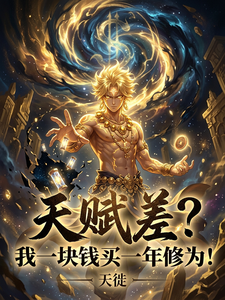
ut it can buy an entire year of absolutely perfect training results! Su Yu stared at his empty wallet and decisively opened up various online loan platforms. “Borrow a thousand bucks! Recharge my vitality!” Boom! His vitality broke a hundred points, shattering the limits of the human body! “Borrow ten thousand bucks! Recharge my combat skills!” Boom! A basic punching technique so common it was everywhere instantly maxed out, revealing the ultimate assassination technique of Five Elements Unity—Inner Force! When a rich kid hired assassins for a midnight ambush, aiming to break both of his legs, they instead ran headfirst into a monster—a human-shaped tyrannosaur, brimming with dragon-like vitality. With just two fingers, Su Yu snapped a steel staff reinforced with alloy. Staring at the killer’s stash of stolen cash—a staggering quarter-million dollars—he showed a corporate-sincere smile: “Thanks for the pre-exam gift pack, Mr. Zhao! I’m gonna go re-invest this!” Three days later, at the National Martial Arts College Entrance Exam, while everyone else struggled just to reach the passing line, Su Yu threw a single punch—and more than a thousand vitality points literally detonated the entire arena!