
The nine members went their separate ways.
This caused quite a stir among the fanbase.
However, fans still rallied behind the slogan, "Together we are a blazing fire; apart we are scattered stars," eagerly anticipating more works and greater success from their favorite idols.
Going solo didn’t mean disbanding.
At least, not officially.
And there was no need to disband anyway.
With the nine now pursuing individual paths, Yang Laoliu was undoubtedly heading into variety shows.
She lacked standout skills—her acting was mediocre, her singing average, and her dancing unremarkable… Well, perhaps that’s a bit harsh, given how much she’d improved over the past year and a half.
But compared to her sisters, she still fell short in professional ability.
So, variety shows were her only viable path—thankfully, she had a natural flair for entertainment and comedic timing.
The other girls either ventured into music or film and television.
Meanwhile, the upcoming Produce Camp 2019—the second season of the girl group survival show—would feature them as senior mentors and rotating team leaders.
This was the kind of schedule fans loved to see.
The second-season contestants were no pushovers, though many had connections behind the scenes.
Having the first-season group return, even just as rotating mentors rather than full-time residents, was a major promotional win for the show.
In just one short year,
the nine had carved out their own places in the industry. The confidence and aura they’d gained from their rising fame were something these new trainees couldn’t match.
A year ago, they too had been trainees, but now, their presence was commanding, as if they’d been industry veterans for years.
The moment they appeared, the new trainees erupted in screams.
For the nine, this was a triumphant homecoming.
…
By April,
Cao Cheng received some good news.
The gaming headset was finally finalized.
Three headset models were designed to fit 99.9% of head shapes, with internal sizing options (large, medium, small).
The exterior design remained unchanged.
Additionally, there was a high-performance virtual pod.
Cao Cheng immediately mobilized nearly a hundred personnel from his security and private military company, equipped them with the PUBG virtual game client,
and had them serve as the first batch of beta testers.
As each person put on the headset, the LED light strip around it flickered to life—a sign it was active.
Researchers monitored everything closely,
with large screens displaying the players’ in-game statuses in real time.
Every possible precaution was taken to prevent accidents.
Everyone was tense—
except for Cao Cheng, who remained relatively calm. He trusted the capabilities of the Core Interface Matrix.
As long as the headset hardware held up, the Core’s terminal wouldn’t fail.
For now, it was still a closed network,
so there was no risk of hacking.
Soon…
the battle began.
To outside observers, it looked like any other game—an overhead view showing all hundred players’ movements.
But inside the game, everything felt astonishingly real.
Some were digging dirt, plucking grass, climbing trees, or wading into rivers…
One even wove grass into makeshift ghillie suits, crafting camouflage on the fly.
If not for their awareness that this was a virtual space, they might’ve struggled to distinguish it from reality.
The immersion was that intense.
They could smell the earthy scent of the forest.
Running was exhausting.
Unlike traditional games, movement here was entirely free-form—players could sprint at full speed, creep silently, or move so slowly they made no sound.
No footstep indicators, no minimap markers.
Of course,
if someone bolted recklessly, nearby players could still hear them.
Whether they could pinpoint the direction depended on skill and experience.
Thankfully, none of these hundred testers were amateurs—most had seen real combat.
The security firm operated overseas, after all, handling messy situations regularly.
Over the years, anyone who hadn’t fired a gun or drawn blood would’ve been laughed at by their colleagues.
Many were bona fide veterans, seasoned with firearms.
After a brief adjustment period,
they quickly adapted to the immersive experience.
…
Meanwhile, researchers outside monitored physiological data—heart rates, blood pressure, etc.—
checking for any adverse effects.
In theory, the game shouldn’t cause drastic changes.
At most, intense moments might spike neural activity, slightly elevating heart rates.
The brain was unpredictable, though.
Even with the Core Interface Matrix’s safeguards, thorough testing was essential before commercialization.
Safety was non-negotiable.
A 100-player battle royale could literally scare someone to death if not properly designed.
Fortunately, everything remained stable.
Even during firefights, heart rates stayed between 80 and 90 BPM, rarely exceeding 100.
Data streamed in steadily.
The match lasted about an hour.
Without the encroaching "toxic zone" forcing players toward the center, triggering skirmishes, it might’ve dragged on for hours.
In real combat, campers were everywhere.
Without the zone, some would’ve stayed prone in the grass indefinitely.
Interestingly,
the toxic zone in this virtual world was actual poison gas.
Unless players found gas masks, holding their breath for a minute would be fatal.
No gradual health depletion—just instant death.
This was a true-to-life battlefield.
A single headshot from a pistol could end you.
So,
almost no one risked the gas—masks were too rare.
…
Soon,
the battle concluded.
A young man named Tang Hu claimed victory.
As prearranged, all hundred logged out.
When they regrouped, their demeanors had shifted.
There was a sharpness in the air—
real, palpable combat intensity.
Their expressions varied—some exhilarated, others pumped with adrenaline, a few frustrated or regretful.
The game fed back sensory data at about 20% intensity.
A match or two left most feeling only slightly fatigued—after all, sprinting, climbing, swimming, and digging were physically demanding, even virtually.
…
Testing wasn’t over.
They’d exited specifically to debrief with researchers, reporting sensations and potential bugs.
Each player provided detailed feedback before diving back in for another round.
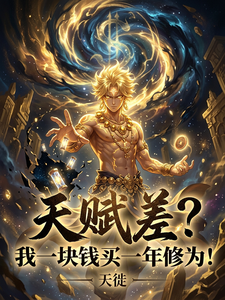
ut it can buy an entire year of absolutely perfect training results! Su Yu stared at his empty wallet and decisively opened up various online loan platforms. “Borrow a thousand bucks! Recharge my vitality!” Boom! His vitality broke a hundred points, shattering the limits of the human body! “Borrow ten thousand bucks! Recharge my combat skills!” Boom! A basic punching technique so common it was everywhere instantly maxed out, revealing the ultimate assassination technique of Five Elements Unity—Inner Force! When a rich kid hired assassins for a midnight ambush, aiming to break both of his legs, they instead ran headfirst into a monster—a human-shaped tyrannosaur, brimming with dragon-like vitality. With just two fingers, Su Yu snapped a steel staff reinforced with alloy. Staring at the killer’s stash of stolen cash—a staggering quarter-million dollars—he showed a corporate-sincere smile: “Thanks for the pre-exam gift pack, Mr. Zhao! I’m gonna go re-invest this!” Three days later, at the National Martial Arts College Entrance Exam, while everyone else struggled just to reach the passing line, Su Yu threw a single punch—and more than a thousand vitality points literally detonated the entire arena!
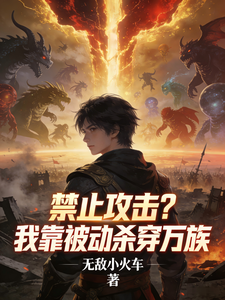
with countless casualties. As a top-tier gamer, Liu Xuan volunteered to join the fight, intending to dominate with his skills, but instead he obtained the hidden class: [Pacifist]. Unable to attack. Unable to use active skills. Fortunately, with each level gained, he acquired a new passive skill. And so, armed with a body full of passives, Liu Xuan slaughtered his way through the battlefield of ten thousand races! [You attacked Liu Xuan] [You gained the debuffs: 'Poison', 'Fear', 'Burning', 'Bleeding', 'Freeze', 'Silence', etc.] [Your attack speed has been reduced by 99%] [Your armor and magic resistance have been reduced by 99%] Warriors of the Ten Thousand Races: How the hell am I supposed to fight this?!

ing gift was a patch of barren land, and disciples were all picked up along the way. He spent fifty years diligently building three "ramshackle little sects," thinking he could finally live a carefree life relying on his disciples. But right at the fifty-year mark, he was suddenly swept away by a spatial rift and exiled to the Chaos Desolation, the Disorderly Ruins. There was no spiritual energy there, only slaughter. Relying on the cultivation feedback from his disciples, Gu Changyuan hacked his way through a sea of blood for eleven hundred years. When the system finally fished him back out, he discovered the ramshackle little sects he'd built back then had developed a rather... unusual style. Hold on... I vanished for a thousand years, so how did my ramshackle little sects become holy lands?!

ts me of treason?" "Correct. The host must return to the capital and gradually build up influence." "Wait—I have half a million soldiers, and you want me to go back to the capital to 'build influence'?" "Host, you are currently the Northern Garrison General, loyal to the Great Xia Dynasty." "Of course I am loyal to Great Xia! Absolutely loyal!" "But you keep referring to yourself as 'We'..." "Never mind the details! Summon all the regional commanders and military officers! We suspect treacherous officials are manipulating the court! They shall march with Us to the capital and purge the corrupt!" "......"