
Aging can be divided into dry-aged and wet-aged, primarily determined by the form of the coating material used, which also influences the final flavor profile of the aged product.
Su Bai had discussed this with a few chefs he knew, including the head chef of the Westin Restaurant and several others he met while dining out.
In the end, he settled on a method suitable for beginners—one that was less prone to mishaps and also quite intriguing:
Dry-aged beef with hotpot red oil.
Zhou Jialu was already waiting in the kitchen, while the Wan sisters had tied on their aprons, eager to assist Su Bai.
When Su Bai pulled out the aging ingredients from the cabinet, Zhou Jialu let out a puzzled "Huh?" and asked, "Isn’t that just hotpot base? Can you really use that for Western cuisine...?"
"Aging is indeed a Western technique, but the ingredients are flexible—it all depends on personal taste preferences," Su Bai explained as he tore open a plastic bag containing a pale-red solid. "If you use regular hotpot base directly, the high salt content would turn the meat into something like cured bacon... which would ruin both the flavor and texture. To be precise, this is hotpot red oil—a salt-free version of hotpot base."
"Oh, I see..."
Next came the star of the show:
A whole M7-grade ribeye, dried overnight to reduce moisture. Since beef fat is, well, fat, excess surface moisture would make it harder for the coating to adhere.
The principle was similar to traditional butter aging, where butter is melted to a semi-liquid state before encasing the meat to seal it from air exposure, then left to ferment slowly in an aging chamber...
But hotpot base is already paste-like at room temperature. Crushed and mixed, it forms a shell around the meat.
Finally, a ring of dried chili peppers was pressed around the exterior—mostly for visual appeal, with little impact on flavor.
"It looks like a pudding cake," Zhou Jialu remarked, snapping a photo of the freshly sealed beef with her phone.
"Pretty much."
"How long until it’s fully aged?"
"About two months, at the very least."
"...That’s so slow! So making a special-aged steak takes forever, huh?"
"Exactly. That’s why restaurants charge a premium for it."
Not that Su Bai was strapped for cash, of course.
He was just enjoying the DIY process.
Zhou Jialu imagined the final product, her face lighting up with anticipation. "Oh! You could fry the steak in this outer layer of beef fat—like 'returning to the source,' right?"
"Probably not," Wan Xinyan interjected, glancing at Su Bai for confirmation. "Hotpot oil tends to burn easily when used for frying. It’d taste charred."
Su Bai nodded. "Right. One of the chefs I consulted warned me not to cook with the aged coating. Aside from burning risks, the aged crust itself isn’t meant for cooking."
These were the kinds of tips Su Bai picked up effortlessly during his exchanges with chefs.
When your wealth reaches a certain level, experts in every field suddenly become incredibly patient mentors.
Even more attentive than the expensive one-on-one tutors before college entrance exams.
Technical industries value connections, after all—no matter how skilled you are, someone still needs to buy what you’re selling.
With that, the beef—now encased in its tray-sealed chamber—was ready.
All that remained was to toss it into the aging chamber and set the temperature, humidity, and timer.
A notification would pop up on Su Bai’s phone when the time came.
Chen Yusheng, as usual, slept in and missed both the lotus root soup at the Chinese restaurant and the beef aging session. Not that she minded much—neither was her cup of tea.
As a native of Jiangcheng, she’d had her fill of lotus root soup growing up—her mom used to make it for her daily.
As for cooking? She wasn’t particularly interested, so she happily left Su Bai to his fun with her senior and the two maids.
Still, after waking up, she asked Zhou Jialu how it went.
"Not fun! Ugh, I said something really dumb. Wan Xinyan totally outclassed me on common knowledge... so annoying."
Zhou Jialu pouted in mock frustration, though there was a hint of genuine dismay. She’d thought her maid training would equip her with all sorts of skills, making her the perfect housekeeper for Su Bai. Turns out, she still had a long way to go.
"It’s fine. Everyone has their strengths," Chen Yusheng said breezily, oozing confidence. "I could never pull off what Xinyan does, but she can’t jungle either."
"True..."
"And you’ve been training so hard, senior. You’ll only get better from here."
Chen Yusheng’s praise was sincere.
Honestly, none of the girls at the mountain villa had been particularly driven—until they became Su Bai’s confidantes. Suddenly, they were all seized by a sense of urgency, turning diligent and ambitious.
Maybe that was Su Bai’s charm.
On the surface, he seemed like an easygoing guy who didn’t ask for much. Yet his indifferent attitude somehow made the women around him anxious without meaning to.
It was an accidental masterstroke. Su Bai had never studied how to "handle" women, but as it turned out, "not caring" was the perfect approach.
From an evolutionary psychology standpoint, a man who remains aloof signals strong genes, triggering an instinctive attraction in women.
Conversely, a man who fawns over a woman gets subconsciously labeled as "inferior" by her primal instincts—even if he’s objectively well-off. It’s like... why waste good traits on being a simp?
Su Bai found it baffling, especially when wealthy guys still acted like doormats. Hard to comprehend...
Japanese women even coined a term for this phenomenon: "frogification."
Like the fairy tale where the prince turns into a frog: when a guy is aloof, he’s the prince; the moment he shows affection, the illusion shatters, and he’s just a frog.
The first time Su Bai read about this, he was floored. Seriously? That’s just messed up. In a guy’s world, healthy relationships are simple—like each other? Great. Don’t? Move on.
Women are a mystery...
Luckily, Su Bai didn’t need to understand. Ever since binding with the system, he could effortlessly romance his confidantes. They’d compete for his attention without causing drama—the perfect harem.
Not bad at all!

he colors of other people’s emotions. Light red meant anxiety. Gray meant exhaustion. Orange meant excitement. Yellow... meant repression. At the same time, he could gain unlimited control over one of those colors. Pale cyan: relaxation. Using this ability, he started offering “two-yuan hugs,” spending an afternoon exchanging emotional-color experiences with others. Then came his final female customer of the day— a girl whose emotional color was pure black... —— A week later, Xu Chuan had become skilled at using pale cyan—Relaxation—treating it like a bottle of menthol balm whenever he needed it. That was when he discovered he had unlocked another unlimited emotional color: Purple, the color of fear. So these emotional colors refresh every week? Fine, I take it back—I’ll never call you useless again... —— Much later, after Xu Chuan had accumulated countless emotional abilities, one night, he suddenly found himself inside someone else’s dream. There, he could use the emotional colors he possessed to paint. And in her dream, he painted her a shower of pink shooting stars, spreading across the depths of the night sky...

or! A blessing for those who struggle with love, a guidebook for dating novices. Quickly match with your dream goddess! Complete walkthroughs earn rewards, and perfect walkthroughs unlock limited achievements!】 Shen Yi, an ordinary office worker, accidentally downloads a mini-game called Dating Simulator. The mini-game is simple: randomly search for dating targets, simulate dates, and receive rewards upon successful confession. Rewards include but are not limited to money, attributes, and skills. The higher the evaluation, the better the rewards, with perfect ratings unlocking mysterious achievements. Shen Yi plans to use this mysterious mini-game to continuously pursue targets and improve himself, making his life better and better. ...... However, after several successful walkthroughs, Shen Yi suddenly notices something strange - the targets he previously simulated dating seem to be searching for him in real life?

ions, keeping it grounded and realistic】 After quitting his job, office worker Su Yang accidentally binds with the "Enjoy Life System." As the name suggests, simply by indulging in life's pleasures, he can earn random rewards from the system—no need to spend money on beautiful women or grovel before anyone. Just enjoy, and the money follows, making it all about effortless fun. The system comes with a scanning feature, allowing him to establish a favorability bond with women rated 85 points or above. Every 20-point increase in favorability unlocks additional rewards. After suffering through over twenty years of hardship, Su Yang trembles with excitement, his dull eyes suddenly gleaming with newfound hope. "Enjoy life? How hard could that be?"
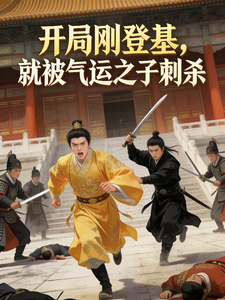
e bizarre and supernatural had descended. The previous emperor was a thoroughgoing tyrant; no longer satisfied with human women, he had set his sights on a stunningly beautiful supernatural entity. He met his end in his bedchamber, drained of all his vital essence. As the legitimate eldest son and crown prince, Wang Hao was thus hastily enthroned, becoming the young emperor of the Great Zhou Dynasty. No sooner had he awakened the "Imperial Sign-In Intelligence System" than he was assassinated by a Son of Destiny—a classic villain's opening. The Great Zhou, ravaged by the former emperor's excesses, was in national decline. The great families within its borders harbored their own treacherous schemes, martial sects began to defy the imperial court's decrees, and border armies, their pay and provisions in arrears, grumbled incessantly against the central government. Fortunately, the central capital was still held secure by the half-million Imperial Guards and fifty thousand Imperial Forest Army who obeyed the court's orders, along with the royal family's hidden reserves of power, barely managing to suppress the realm. As the Great Zhou's finances worsened and supernatural activities grew ever more frequent, the court sat atop a volcano. Ambitious plotters everywhere dreamed of overthrowing the dynasty, and even some reclusive ancient powers emerged, attempting to sway the tides of the world. At the first grand court assembly, the civil and military officials nearly came to blows, fighting tooth and nail over the allocation of fifty million taels of silver from the summer tax revenues. The spectacle opened Wang Hao's eyes—the Great Zhou's bureaucracy was not only corrupt but also martially proficient, a cabinet of all-rounders. Some officials even had the audacity to suggest the emperor release funds from the imperial privy purse to address the emergency. Wang Hao suddenly felt weary. Let it all burn.