
As per tradition, an offering!
Volume 2 Summary—again, feel free to skip it.
First, addressing the theories about the plot from most of the "Husbandos" (fans), I’ve skimmed through them, and while I can’t say they’re entirely wrong, they’re pretty much off the mark.
Purity—your purity levels are just too low.
Might I suggest playing more Valorant to sharpen that purity? (How did y’all know Haki drew the Recon Phantom skin?)
Alright, enough digressions—let’s talk about the story.
First, let me clarify: this is not an autobiography. Not an autobiography. NOT an autobiography. Anyone calling it one is just stirring the pot for clout. I’m sure most readers are just playing along with the meme—no one actually believes those "autobiography" claims, right?
That said, a lot of the content in this book does resonate with Haki’s personal emotions.
For example, many people criticize the protagonist for being a "scumbag."
I get the criticism, but I can’t help but notice the same people yelling, "Harem route! Harem route! If the author dares to leave out even one girl, I’m splitting my 5-star review into five installments!"
Haki: ?????
Seriously, dude?
That’s just setting me up for failure...
Honestly, writing this book, Haki’s self-insertion runs deep.
Personality-wise, I spoil my sister to an extreme degree—soft-hearted, yielding to tenderness but not force. The protagonist in the story is pretty much a mirror of that.
Of course, this doesn’t mean I cook three meals a day for her. I do occasionally, but I always make sure to wake her up for breakfast, even if I’m not home—I’ll call her.
No repetitive "Wake up, wake up, wake up..." nonsense. Instead, I tickle her feet. Works every time.
Quick note: Out of the four sisters, only one is my biological sister. The other three are my aunt’s kids, but since our families lived together growing up, we’re as close as real siblings.
Point is, Haki can’t say no to his sisters, so naturally, neither can the protagonist in the story.
But excessive spoiling comes with its own problems. In the novel, Little Man’s spoiled brat attitude is actually inspired by my real-life sister, who once said some really harsh, hurtful things to me. I won’t go into details, but it did sting. Eventually, the other three sisters ganged up on her, dragged her over to apologize, and I forgave her.
It’s understandable, though. Sometimes, the cruelest words are reserved for the closest people—because you know they’ll never leave, no matter what.
Okay, okay—moving on. Some "Husbandos" have called out the protagonist for being indecisive, stringing along both Shu Ning and Shu He.
Well... this is where some personal life lessons come into play.
Back when I’d just graduated, I took a solo trip to Bianliang during summer break. One night, I saw a girl around my age crouched on the sidewalk, crying. The street was dark, no lights—I thought it was unsafe, so I told her, "You can cry somewhere with more people around..." (Swear to god, I meant "somewhere safer," but it came out wrong.)
This was pure "main character syndrome" at work. I wasn’t even concerned about why she was crying—I just wanted to look cool, like something out of a movie, and got lost in my own delusions. (This mindset birthed the character Haki Yao.)
But she just kept crying, not saying a word. I figured I’d stick around—it was dark and deserted, after all.
Eventually, she stopped crying, and we started talking. Turned out she was a freshman at Henan University, crying over family issues (her dad’s debt, loan sharks harassing them).
Long story short, we ended up as each other’s first love.
Back then, I was so awkward—I couldn’t even hold her hand in public. If she linked arms with me, I’d pull away instantly. Just... painfully inexperienced.
We lasted a year, long-distance. Whenever I had time, I’d visit her in Kaifeng, bringing enough food for her entire dorm.
Then, out of nowhere, she started acting distant. Sometimes she’d leave my messages on read.
Panicking, I reached out to her roommate (and close friend), who—after all the free meals I’d treated her to—spilled the truth under my promise of secrecy: my girlfriend had been spending a lot of time with a senior, even eating meals together regularly.
It felt like the sky was falling.
We started fighting over little things until she unilaterally blocked me on everything.
I was wrecked for a long time. Then, a junior—my second girlfriend—started showing me a lot of care. To move on, I ended up with her.
We continued our sweet romance for over a week until, one evening, my first love suddenly showed up at my school, asking me to come out because she had something to say.
I was really torn at the time. She insisted she wouldn’t leave unless I came out, and being the indecisive idiot I was, I went to meet her.
As soon as we met, she crouched down and started crying.
It felt just like the first time we’d met—the déjà vu was overwhelming.
She said she was wrong, that she shouldn’t have acted the way she did, and all that, begging to get back together.
At first, I refused, but she kept crying relentlessly until past 2 a.m. Honestly, I shouldn’t have caved.
But she was my first love, and we’d shared a year together. In the end, I couldn’t bear it anymore and agreed to reconcile. (Go ahead and call me a scumbag—I deserve it.)
The problem was, I didn’t know how to break the news to my second girlfriend. I agonized over it for days before finally coming clean. (During that time, I was two-timing, which disgusts me even now. Feel free to roast me. Writing about the protagonist’s hesitation was painfully relatable—it hurt to put into words.)
In the end, I got back with my first love, but I realized I couldn’t love her as selflessly as before. Something just felt off, and it ate at me.
Eventually, she pushed me to my limit with a series of outrageous actions over two hours, until I snapped and yelled at her. Even though it was her fault, she latched onto the fact that I’d cursed at her, twisting it to make me the villain… and that was how we broke up.
This incident later inspired a certain plotline in the Public Service Department segment of the novel.
After the breakup, Hajizo (the protagonist) has stayed single ever since.
So… well… whatever. Everyone has their own story to tell.
The lesson Hajizo took from it all was this:
—Volume 3: "Kindness Is a Sin"

ions, keeping it grounded and realistic】 After quitting his job, office worker Su Yang accidentally binds with the "Enjoy Life System." As the name suggests, simply by indulging in life's pleasures, he can earn random rewards from the system—no need to spend money on beautiful women or grovel before anyone. Just enjoy, and the money follows, making it all about effortless fun. The system comes with a scanning feature, allowing him to establish a favorability bond with women rated 85 points or above. Every 20-point increase in favorability unlocks additional rewards. After suffering through over twenty years of hardship, Su Yang trembles with excitement, his dull eyes suddenly gleaming with newfound hope. "Enjoy life? How hard could that be?"

. As long as he maintains the villain image and follows the plot to the grand finale, he can obtain generous rewards and return to the real world. So Gu Chen'an entered the role and began to act as a scumbag villain, but who would have expected that the female leads could hear his inner thoughts. Miss Su from the Su family was shocked: "I originally thought Gu Chen'an was a scumbag, but I didn't expect he turned out to be a gentleman! What? You said I have to call off the engagement? I definitely won't, I'll piss you off!" Bai Yuan Tian was dumbfounded: "Young Master Gu is usually unreasonable and a complete brat, but he actually calls me little sweetie in his heart? What, Young Master Gu even said he likes me?" As the female leads' images collapsed more and more, the plot also collapsed with it. Gu Chen'an looked at all this chaos. "Ladies, don't aggro me, if you keep this up the male lead really will stab me, I still need to survive to the grand finale!"

he colors of other people’s emotions. Light red meant anxiety. Gray meant exhaustion. Orange meant excitement. Yellow... meant repression. At the same time, he could gain unlimited control over one of those colors. Pale cyan: relaxation. Using this ability, he started offering “two-yuan hugs,” spending an afternoon exchanging emotional-color experiences with others. Then came his final female customer of the day— a girl whose emotional color was pure black... —— A week later, Xu Chuan had become skilled at using pale cyan—Relaxation—treating it like a bottle of menthol balm whenever he needed it. That was when he discovered he had unlocked another unlimited emotional color: Purple, the color of fear. So these emotional colors refresh every week? Fine, I take it back—I’ll never call you useless again... —— Much later, after Xu Chuan had accumulated countless emotional abilities, one night, he suddenly found himself inside someone else’s dream. There, he could use the emotional colors he possessed to paint. And in her dream, he painted her a shower of pink shooting stars, spreading across the depths of the night sky...
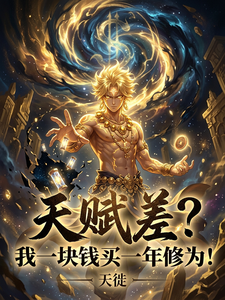
ut it can buy an entire year of absolutely perfect training results! Su Yu stared at his empty wallet and decisively opened up various online loan platforms. “Borrow a thousand bucks! Recharge my vitality!” Boom! His vitality broke a hundred points, shattering the limits of the human body! “Borrow ten thousand bucks! Recharge my combat skills!” Boom! A basic punching technique so common it was everywhere instantly maxed out, revealing the ultimate assassination technique of Five Elements Unity—Inner Force! When a rich kid hired assassins for a midnight ambush, aiming to break both of his legs, they instead ran headfirst into a monster—a human-shaped tyrannosaur, brimming with dragon-like vitality. With just two fingers, Su Yu snapped a steel staff reinforced with alloy. Staring at the killer’s stash of stolen cash—a staggering quarter-million dollars—he showed a corporate-sincere smile: “Thanks for the pre-exam gift pack, Mr. Zhao! I’m gonna go re-invest this!” Three days later, at the National Martial Arts College Entrance Exam, while everyone else struggled just to reach the passing line, Su Yu threw a single punch—and more than a thousand vitality points literally detonated the entire arena!