
That evening, they had hand-pulled rice for dinner.
Of course, they couldn’t actually eat it with their hands—it was scalding hot.
They also had some mutton soup, sweet and delicious.
The family was more or less gathered together.
Cao Decheng’s purpose for this trip had been achieved.
Sightseeing was just a bonus.
The main goal was to personally deliver the news of his engagement to Old Cao.
He also brought his fiancée along for Old Cao’s approval—a matter of courtesy, really.
How could they get engaged without the future daughter-in-law meeting the father-in-law first?
Without meeting the parents, how could they possibly gain their blessing?
Though Cao Decheng knew Old Cao was unlikely to object, proper etiquette still had to be observed.
As for this future daughter-in-law,
Cao Cheng was quite satisfied.
She seemed sweet and well-mannered, but there was an underlying fierceness to her. Combined with her family background, she was a solid match.
As the future matriarch of the Cao family’s second generation, she was at least qualified.
The reason it was only "qualified" was because Cao Cheng hadn’t gotten to know her deeply yet. He could only make a rough judgment for now—there’d be time to observe her further later.
Besides,
children will find their own paths.
Cao Cheng probably wouldn’t bother meddling in the next generation’s affairs.
To put it bluntly, even if one of the kids ended up being a hopeless simp, Cao Cheng might not even bother correcting them.
After all, the road is one they chose themselves.
The role of a simp is one they embraced.
Even if the path is littered with filth, disgusting to outsiders, who’s to say the simp wouldn’t find happiness in never worrying about food or drink along the way?
Who can really say?
Right?
Still,
this was only a concern if there were many children in the future. For now, Cao Cheng didn’t have to worry.
At present, the only one getting engaged and preparing for marriage was Cao Decheng.
And as the eldest son, his wife would be the primary matriarch of the second generation.
Her name would eventually be recorded in the family registry.
Right now, the sacred family registry only included the first generation.
Cao Cheng, as the family’s founder, and Tang Xin, as the matriarch, were listed, while the others were secondary branches.
As for the children, none had been added yet.
Only once they started their own families, established themselves, and earned Cao Cheng’s approval would the second-generation branches be formally entered into the registry.
This would ensure they received the family’s ancestral blessings and certain exclusive privileges for generations to come.
......
Cao Decheng and Chen Yi stayed for two days.
Then they took their leave.
They went off to travel elsewhere, unconcerned about Cao Cheng’s trio.
Though the car was spacious enough to fit everyone, it still felt a little awkward.
Besides, they’d already met.
And been approved.
The next time they’d see each other would likely be at the engagement ceremony in Beijing or Zhonghai.
Moreover, Cao Decheng wanted some alone time with his fiancée, to travel just the two of them.
After all, tagging along with Cao Cheng made the younger couple feel somewhat out of place.
......
A month passed in the blink of an eye.
Cao Decheng and Chen Yi finally returned to Beijing, dusty and worn out, their once-new SUV now looking like a battered secondhand wreck.
The past month had been a road trip.
After parting ways with Cao Cheng, they bought a car on the spot.
Then they hit the road, driving all the way out of the western regions and back to Beijing, stopping and sightseeing along the way.
Some days were full of joy.
Others were exhausting.
Their brand-new vehicle now resembled a battle-scarred relic.
Back in Beijing,
Cao Decheng spent a day resting at his maternal grandfather’s place before heading to Chen Yi’s family home with gifts. It was time to meet her parents and discuss the engagement.
Later, Ren’s mother would send someone over for a joint meal, where they’d finalize details.
They’d also discuss the scale of the engagement banquet.
Most likely,
it would be a small affair.
Given the differing statuses involved, a grand celebration wasn’t appropriate—or even permissible.
So it’d probably just be the families sitting together, exchanging pleasantries, praising each other’s children while modestly downplaying their own.
And that would be the engagement settled.
The more important matter was the redistribution of resources.
The Chen family wasn’t insignificant either.
Some of their resources would naturally flow toward Cao Decheng as their son-in-law.
The same went for Old Cao’s side...
Yet,
Cao Cheng, as the father, couldn’t be bothered with any of this.
Not out of cold indifference, but sheer laziness.
Because whether it was business resources or political connections, to Cao Cheng, they were all fleeting concerns.
So why bother?
What really mattered was that Cao Decheng was just the beginning.
There were plenty more to come.
Not to mention Tang Xin’s three children, who’d also need matchmaking, engagements, weddings, and so on.
And this was only the start.
Soon enough, grandchildren would arrive, and Cao Cheng would become a grandfather.
By the time he finished handling his own children’s affairs, the grandkids would be grown, bringing a new cycle of engagements, marriages, births—and the endless reshuffling of resources, collaborations, and alliances.
Generation after generation.
If Cao Cheng actually tried to micromanage all this, what was the point of immortality?
Just to play eternal babysitter?
Ridiculous.
......
So let no one accuse Cao Cheng of favoritism.
Or claim he plays favorites.
He treats everyone equally.
If even his firstborn, Cao Decheng, gets minimal attention, the ones who come after can expect even less.
"Sigh."
Cao Cheng exhaled wearily.
This was exactly the kind of thing he couldn’t be bothered with. Earlier, Old Cao had called, asking if he’d attend Cao Decheng’s engagement banquet in October.
Cao Cheng outright refused.
He told Old Cao to go in his stead.
There was no way he’d show up.
Besides,
since when did an engagement require the whole family’s presence?
Nonsense.
He’d consider going for the actual wedding.
Only because skipping that would be too blatant.
After hanging up, Cao Cheng rubbed his temples at the thought of the future.
Thankfully, the two women beside him knew how to read the room.
Though they didn’t understand why he suddenly seemed melancholic, they didn’t pry. Instead, they quietly busied themselves,
using action to lift his mood.
And it worked.
Soon enough,
Cao Cheng pushed his worries aside.
......
Truth be told,
there were many things that weighed on Cao Cheng.
In his century-long dream, he’d been a grandfather, even a great-grandfather. He’d buried children of his own.
Then died of old age in that dream.
A hundred years, gone in a blink.
When he woke, even his soul felt aged.
But...
when he thought about it, a hundred years wasn’t that long.
Yet in that time, the family’s affairs had become a tangled mess.
Even in old age, there was no peace—everything was dumped on Cao Cheng.
Exhausting.
And that was just a century.
Now?
Cao Cheng could easily imagine that, a hundred years from now, his children would number in the double digits.
Each would branch out, and soon the descendants would reach triple digits.
Maybe even sooner—within a few decades.
A whole swarm.
Cao Cheng could vividly picture the headache awaiting him.
And that was why he’d sighed earlier.
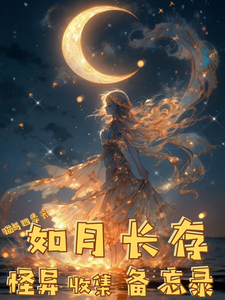
iemie, male, Race: Moon. Hobby: Collecting anomalies. At first, he thought he possessed two systems: the Crimson Rainbow Moon and the Clear Cold Frost Moon. One day, he discovered that he himself could also become a system for others, holding the chessboard of fate. The Eighth Epoch, also known as the Eternal Moon Epoch. Humans, witches, elves, bloodline descendants, specters, demons, and spirits together compose a new history. Walking the path on behalf of the moon, before he knew it, Chen Miemie's footsteps were followed by all manner of strange and wondrous anomalies. As time passed, many titles circulated about him—The King in Yellow, Lord of Anomalies, Heart of the Eternal Moon, and more. "Me? I'm just a traveler who enjoys collecting interesting creatures," Chen Miemie said.

] This is a dark fantasy-themed dating simulation game. The main gameplay involves containing various monster girls and investigating the truth of a world shrouded in mist alongside your companions. However, due to his love for the dark and bizarre atmosphere, Luo Wei ended up turning a dating game into a detective mystery game. Women? Women only slow down his quickdraw! To Luo Wei, the female leads in the game are more like tools to perfectly clear levels and squeeze out rewards. For Luo Wei, flirting with every girl he meets and then discarding them is standard procedure. Worried about characters losing affection points? No need. With his maxed-out charm stat, Luo Wei is practically a "human incubus." A little psychological manipulation and those points come right back. It's a bit scummy, but the paper cutout heroines in the game won't actually come at him with real cleavers. However... Luo Wei has transmigrated. He's accidentally entered the second playthrough of this game. His past actions have caused all the girls to transform into terrifying yanderes. Due to the game's setting, most of the heroines he once contained are "troubled girls." Obsessive, twisted, mentally unstable, all aggressive yanderes... The type who will kill you if they can't have you... Luo Wei wants to cry but has no tears left. "I really just want to survive..." In short, this is a story of battling wits and engaging in a love-hate relationship with yanderes.
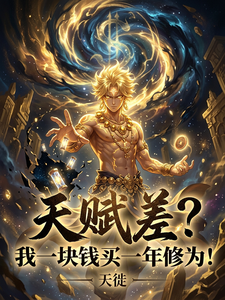
ut it can buy an entire year of absolutely perfect training results! Su Yu stared at his empty wallet and decisively opened up various online loan platforms. “Borrow a thousand bucks! Recharge my vitality!” Boom! His vitality broke a hundred points, shattering the limits of the human body! “Borrow ten thousand bucks! Recharge my combat skills!” Boom! A basic punching technique so common it was everywhere instantly maxed out, revealing the ultimate assassination technique of Five Elements Unity—Inner Force! When a rich kid hired assassins for a midnight ambush, aiming to break both of his legs, they instead ran headfirst into a monster—a human-shaped tyrannosaur, brimming with dragon-like vitality. With just two fingers, Su Yu snapped a steel staff reinforced with alloy. Staring at the killer’s stash of stolen cash—a staggering quarter-million dollars—he showed a corporate-sincere smile: “Thanks for the pre-exam gift pack, Mr. Zhao! I’m gonna go re-invest this!” Three days later, at the National Martial Arts College Entrance Exam, while everyone else struggled just to reach the passing line, Su Yu threw a single punch—and more than a thousand vitality points literally detonated the entire arena!

ts me of treason?" "Correct. The host must return to the capital and gradually build up influence." "Wait—I have half a million soldiers, and you want me to go back to the capital to 'build influence'?" "Host, you are currently the Northern Garrison General, loyal to the Great Xia Dynasty." "Of course I am loyal to Great Xia! Absolutely loyal!" "But you keep referring to yourself as 'We'..." "Never mind the details! Summon all the regional commanders and military officers! We suspect treacherous officials are manipulating the court! They shall march with Us to the capital and purge the corrupt!" "......"