
The global rich list was announced, leaving many jaws on the floor.
Topping the list was Carlos, holding the title for three consecutive years with a net worth of $69 billion.
Second was Gates, with $61 billion.
Third was none other than Cao Cheng, estimated at $52 billion.
Fourth was Buffett, at $44 billion!
Fifth...
...
Cao Cheng had unexpectedly surged into the top three—something no one saw coming.
After all, just three years ago, his net worth was under $10 billion.
In just three years, it had multiplied several times over.
This wasn’t like turning $100 into $500.
This was turning under $10 billion into $50 billion.
A world of difference.
The list even included a special section on Cao Cheng’s background.
It also detailed the industry distribution of this year’s rich list.
Industry breakdown?
Among the listed billionaires, finance and investment accounted for 18%.
Next was IT at 13%.
Retail and natural energy each took up 12%, and so on...
From this, it was clear that Cao Cheng had leveraged the global subprime crisis and the European debt crisis, using financial and investment strategies to become one of the wealthiest individuals on the planet in just a few short years.
And that was just the conservative estimate.
Cao Cheng held shares in Oulai, which could be precisely calculated.
Beyond that, he owned Miracle Cosmetics, Miracle Media, Miracle Capital... none of which were publicly traded, leaving only rough estimates.
But from certain subtle clues, one could roughly gauge Cao Cheng’s wealth.
For example, Miracle Capital had invested in listed giants like Tencent.
There were also numerous unlisted tech companies.
Including land holdings.
After factoring in all these miscellaneous assets, his net worth was pegged at over $50 billion.
But so much was still left uncounted.
Take lithium batteries, Xiaomi, ByteDance—all recent investments that would take off in a few years.
Any one of these could generate massive fortunes.
Then there were Cao Cheng’s private investments in mines, kept under tight wraps.
Of course.
Cao Cheng wasn’t the only one like this. Every single person on that list had plenty of unaccounted assets.
How could they possibly reveal everything?
What were shell companies for?
What were those offshore islands hiding?
Those in the know, knew.
But Cao Cheng was different from the rest.
He never dodged taxes—a true paragon of virtue.
The reason he kept things under wraps was simply because some things couldn’t be exposed yet, at least not now.
Take his current billionaire status.
No matter how you looked at it, Cao Cheng’s empire was primarily built on finance and investments.
International capital wasn’t afraid of him playing these games.
Even if he made mountains of money, it didn’t matter.
It wasn’t a threat to national security.
And it was all just "floating wealth."
A fat sheep, ripe for the slaughter.
If they wanted to take him down, they could do it anytime.
Sometimes, being the fat sheep was the safest position.
Because if Cao Cheng’s wealth came from high-tech industries like semiconductors—industries under strict global embargo—you can bet he’d already be facing sanctions.
So,
no matter how much noise certain people made internationally—whether they called Cao Cheng a financial thief or Europeans demanded his assets be frozen—none of it posed any real danger.
Cao Cheng couldn’t even be bothered to respond.
But this would only last a couple more years.
After that, all this floating wealth would have to be pulled back home, away from overseas, just in case.
...
...
Aside from Cao Cheng, another hot topic recently was the launch of the first-generation "kidney phone."
Last year, the iPhone 4S debuted in the Land of the Free.
This year, it finally arrived in the Eastern Bloc—Old Joe’s magnum opus before his death, sparking a frenzy and marking the beginning of the smartphone era.
A new king had ascended.
And with it, the death knell for the old king, Nokia.
Meanwhile, Cao Cheng continued pouring vast sums into R&D...
But not for something as narrow as a new phone or car.
As someone who’d seen the future,
Cao Cheng knew exactly when phones would become obsolete.
So whether it was cars or phones, they were just vessels for integrating cutting-edge technology at this stage.
To put it bluntly,
phones were just the surface. What really mattered was the underlying industries—like 4G and 5G communications.
Display tech: LCD, OLED, driver chips...
Battery tech and battery management systems.
Camera sensors, voice coil motors, imaging algorithms...
Software and operating systems.
And finally, manufacturing—production equipment, fully automated assembly lines, and more!
The same went for cars. They weren’t just four wheels and a shell.
They involved new alloys, rubber, glass, controllers, chips, sensors, driving systems, and so on...
And
this kind of R&D was what truly mattered.
Not only would it lay a solid foundation for the future, but it would also expand the entire production chain.
Creating more jobs—especially high-skilled ones.
These were the talents the future would need.
Cao Cheng understood this all too well.
So he invested heavily in these areas, sparing no expense in research and development for anything that could be utilized now, even if it came from his "treasure chest."
Which was why he hadn’t bothered with phones or cars.
To be fair,
the technology Cao Cheng currently controlled wasn’t groundbreaking, but it was certainly on par with what would exist a decade later.
But much of it was kept under wraps.
Because these next few years were critical.
Otherwise, Cao Cheng could’ve easily unveiled a "bezel-less" phone—something unheard of at the time—
redefining smartphones once again.
And instantly carving out a huge chunk of the global market.
Maybe not enough to crush Nokia and Apple outright, but certainly enough to stand toe-to-toe with them.
But what would be the point?
None at all!
It would only draw more scrutiny and sanctions, cutting into Cao Cheng’s precious R&D time.
All risk, no reward.
Rather than chasing market share, it was better to focus on R&D. The real battle was coming, and that’s when Cao Cheng would make his move.
It was just a matter of waiting a couple more years.
Of course,
Cao Cheng also had a bit of a "fattening the sheep" strategy.
Right now, there weren’t many "Apple fanboys," but in the future, they’d number in the millions.
If he crushed Apple now, the backlash from those fanboys would be minimal—no satisfaction, little negativity, and it’d just invite sanctions.
So, let them have their moment.
The higher they jumped, the harder they’d fall.
...
That day.
Cao Cheng was roasting a suckling pig by the lake in his eco-park.
The artificial lake was fed by the Su River, eventually merging into the greater lake system before flowing into the Pujiang River and out to sea.
The water level was steady, and the quality was excellent.
Surrounded by picturesque scenery, Cao Cheng occasionally came here to unwind as the weather warmed, keeping an eye on research institute developments between bites.
Fine wine.
Delicious food.
Stunning views.
A gentle spring breeze.
The only thing missing was a beauty by his side.
Before, the mixed-race "Su Yue" had kept Cao Cheng company. But after Tang Xin left and Ren Fanxing went back to work, Su Yue had become his most frequent companion.
But even she had her own responsibilities now.
Don’t mistake the mixed-race girl for just a pretty face—she’s got real substance.
Like her father, she’s inherited a sharp business acumen and the genes to match.
That’s why,
when Miracle Pharmaceuticals was handed over to her management, she ran it with remarkable efficiency. The only thing missing now is a groundbreaking product to redefine the era.
Su Yue’s gaze, aside from lingering on Young Master Cao, is mostly fixed on the research institute, waiting for the new study to complete its testing phase.
Once that’s done, they can apply for clinical trials.
Well.
Of course.
These human trials aren’t the kind of inhumane atrocities committed by those damn Japs. Instead, they rely on volunteers for drug testing.
Even though Cao Cheng trusts his institute and the product from the treasure chest, he still follows due process.
You can’t just pull data out of thin air and fabricate results.
Reports, research papers, and a series of validation tests are all necessary before the product can hit the market.
Especially for an original drug!
From what Young Master Cao knows,
currently, there are about 4,800 pharmaceutical companies in the country, and over 90% of them focus on generic drugs.
Among them, a portion don’t even conduct research—they don’t develop original drugs or generics, relying solely on advertising.
Only the remaining 0.1% actually work on original drugs.
It’s unavoidable.
You see,
the average R&D cycle for an original drug is over ten years. Many pour a decade of effort into research, only to end up with mediocre results and billions down the drain.
Generics, on the other hand, are simple—just wait for someone else’s patent to expire, then copy the formula.
No clinical trials needed.
It slashes both R&D time and costs.
As the saying goes, generic drug companies just pour raw materials into machines and out comes gold.
Insanely lucrative.
Businessmen chase profits.
With so many open generics available, who’d bother with original drugs?
Only Young Master Cao would.
What’s more,
while other drugs are easy to replicate, Cao Cheng’s formulations aren’t so straightforward—just like daily chemical products.
Even if the materials and elements are disclosed, foreign competitors still can’t replicate them.
A 20-year patent protection period? Doesn’t even matter.
…
His thoughts drift far away.
The aroma of grilled meat fills the air as the sizzle of oil pops in the background. Cao Cheng leans back in his chair, utterly relaxed.
All he’s missing is a beauty by his side.
Maybe thinking about it makes it happen.
Soon enough,
the click-clack of high heels echoes from the stone-paved path, growing louder.
Judging by the pace and rhythm,
Cao Cheng doesn’t even need to open his eyes to know it’s his elder sister.
She’s grown far more composed these days.
In the past, she’d put on airs, deliberately slowing her steps, believing it made her seem more dignified.
But now it’s different.
Her footsteps are swift and steady—clip-clip-clip.
A clear reflection of her mindset.
She’s fully recovered.
“You’re quite at ease, aren’t you?” Her fragrance quickly overpowers the scent of roast suckling pig, flooding Cao Cheng’s senses.
He cracks an eye open, looking up at his sister from this unflattering angle.
Even this “death perspective” can’t diminish her natural beauty.
Cao Cheng sighs. “At ease? You’ve got no idea. I just sat down. I’ve been buried in biopharmaceutical research—do you know how exhausting that is? It’s mentally draining.”
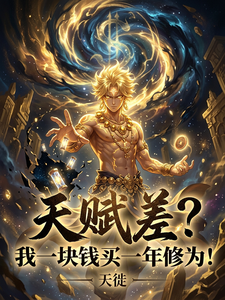
ut it can buy an entire year of absolutely perfect training results! Su Yu stared at his empty wallet and decisively opened up various online loan platforms. “Borrow a thousand bucks! Recharge my vitality!” Boom! His vitality broke a hundred points, shattering the limits of the human body! “Borrow ten thousand bucks! Recharge my combat skills!” Boom! A basic punching technique so common it was everywhere instantly maxed out, revealing the ultimate assassination technique of Five Elements Unity—Inner Force! When a rich kid hired assassins for a midnight ambush, aiming to break both of his legs, they instead ran headfirst into a monster—a human-shaped tyrannosaur, brimming with dragon-like vitality. With just two fingers, Su Yu snapped a steel staff reinforced with alloy. Staring at the killer’s stash of stolen cash—a staggering quarter-million dollars—he showed a corporate-sincere smile: “Thanks for the pre-exam gift pack, Mr. Zhao! I’m gonna go re-invest this!” Three days later, at the National Martial Arts College Entrance Exam, while everyone else struggled just to reach the passing line, Su Yu threw a single punch—and more than a thousand vitality points literally detonated the entire arena!
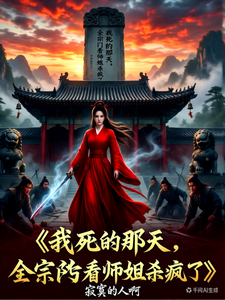
ive and Ruthless] Before his transmigration, Ye Xuan was playing a game called "Severing Emotions to Attain the Dao." The game's core wasn't about leveling up by fighting monsters, but about conquering various "bad women" with wicked personalities and cold, fickle natures. There was only one method to conquer them: stay unwaveringly by their side, then die at a critical moment, driving them to madness after losing the protagonist. The higher their level of regret, the higher the player's score. To dominate the server, Ye Xuan conquered all the bad women. In the early stages, he showered them with boundless tenderness, only to choose to sacrifice himself for them later, making them weep bitterly and drown in regret. Among them were: Xia Lengyue, the unfaithful immortal wife who chased after powerful men and discarded her husband like trash. Ye Qingcheng, the Demonic Venerable of the Joyous Union Sect, who appeared pure and innocent but was, in reality, promiscuous. Wu Lingxiao, the Empress of the Great Xia Dynasty, who lusted after men and loved maintaining a harem. Bai Qiangu of the Endless Demonic Sect: a bloodthirsty mass murderer. However, when the protagonist transmigrated into the game world, he made a horrifying discovery. Eight hundred years had already passed. The bad women he had conquered had now each become deities and revered ancestors. Faced with the endless stream of toxic women coming for him, Ye Xuan could only rely on his god-tier acting skills to carve a path of survival through this world of treacherous women.

ts me of treason?" "Correct. The host must return to the capital and gradually build up influence." "Wait—I have half a million soldiers, and you want me to go back to the capital to 'build influence'?" "Host, you are currently the Northern Garrison General, loyal to the Great Xia Dynasty." "Of course I am loyal to Great Xia! Absolutely loyal!" "But you keep referring to yourself as 'We'..." "Never mind the details! Summon all the regional commanders and military officers! We suspect treacherous officials are manipulating the court! They shall march with Us to the capital and purge the corrupt!" "......"

orn and Humiliation】【Forced Love】 In his past life, Lin Ran was betrayed and murdered by his girlfriend and family, while the yandere female aristocrat, who had treated him as a mere plaything, avenged him by doing in his enemies. Upon seeing the yandere female aristocrat lying in the same coffin, ready to die with him, Lin Ran realized how profoundly mistaken he had been. Reborn, he abandoned the fickle campus beauty and wholeheartedly embraced the yandere female aristocrat's arms. "Ran! If I dig out your eyes and turn them into a specimen, you'll only be able to look at me!" Lin Ran: "Darling, kiss me!" "Ran! If I break your legs, you won't run away anymore, right?" Lin Ran: "Love, hold me tight!" "Ran! If..." Lin Ran: "Hush now! Love me more!" Luo Yao: ... Seeing his scumbag dad: "Take him out!" Seeing his stepmother: "Get rid of her!" Seeing his brother: "Eliminate him!" Seeing his white moonlight: "Send that to Southeast Asia!"